
AdBlue® in Petrol Car
We are wrong-fluid specialists, removing AdBlue® contamination from petrol fuel systems across all vehicle types in Scotland.
All of our technicians are fully qualified and fully insured, with hundreds of five-star reviews.
24/7 emergency callouts across Scotland, with prices starting from £275.

AdBlue® Petrol
AdBlue® in Petrol Car
AdBlue® in a petrol car is the least common wrong fluid scenario we deal with, and it’s one that often causes more uncertainty than the more familiar misfuelling situations. Most drivers have a broad sense of the risks around petrol in diesel or diesel in petrol. Far fewer have considered what happens when AdBlue® enters a petrol fuel tank.
Petrol cars carry no AdBlue® system. There is no AdBlue® reservoir, no SCR exhaust system, and nothing in the petrol fuel system that was specified for contact with urea solution. When AdBlue® reaches a petrol tank, the contamination it creates is genuinely different from either standard misfuelling scenario: different chemistry, different damage risks and a different recovery requirement.
Keep the engine off and call us. Recovery starts from £275.
Check out our recent
Customer reviews
1. DON’T START ENGINE
2. CALL OUR TEAM NOW:
0800 246 5297
3. AWAIT TECHNICIAN
GET HELP NOW!
Call Free on 0800 246 5297
Our aim is 100% satisfaction at a fair competitive price!

AdBlue® in Petrol Car
AdBlue® Petrol Engine Damage
The damage risk from AdBlue® in a petrol car is determined primarily by whether the engine was started and how long it ran.
If the engine didn’t start, the contamination is contained in the tank as a liquid. The recovery is more straightforward, though fuel system components will have had some urea solution contact depending on how long it sat there before we arrived.
If the engine ran on AdBlue®-contaminated petrol, the exhaust system would have been exposed to combustion products from burning urea solution. The lambda sensor and three-way catalytic converter are both affected; the extent depends on running time. Every minute of engine operation on contaminated fuel extends the exposure. Calling us as soon as the contamination is discovered is always the right response.
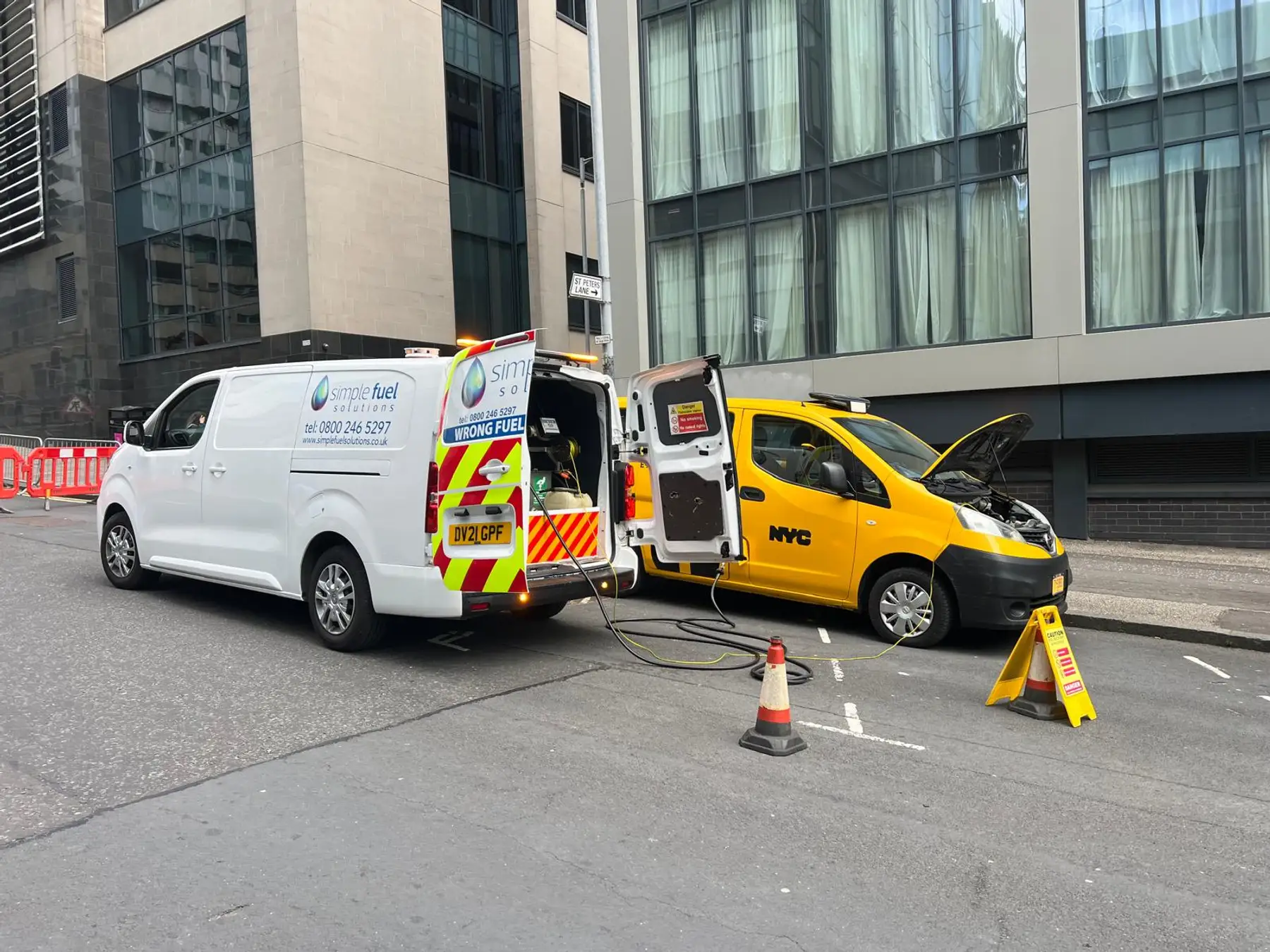
AdBlue® in Petrol Tank
AdBlue® Petrol Contamination
AdBlue® reaching a petrol tank via a standard forecourt pump is unusual. The routes tend to be more indirect, which is part of why this contamination is less familiar.
- A shared container is the most common source: a jerry can or portable bottle previously used for AdBlue® that wasn’t properly cleaned before being used for petrol can transfer urea residue without any obvious visual indication
- Agricultural and commercial environments where AdBlue® is handled alongside fuel regularly are higher-risk settings; volume of use combined with multiple fluid types creates more opportunity for a mix-up
- Domestic situations where someone manages both an AdBlue® diesel and a petrol car at the same address are also a realistic source of cross-contamination
Whatever the route, call us and describe what happened; the recovery process is the same.
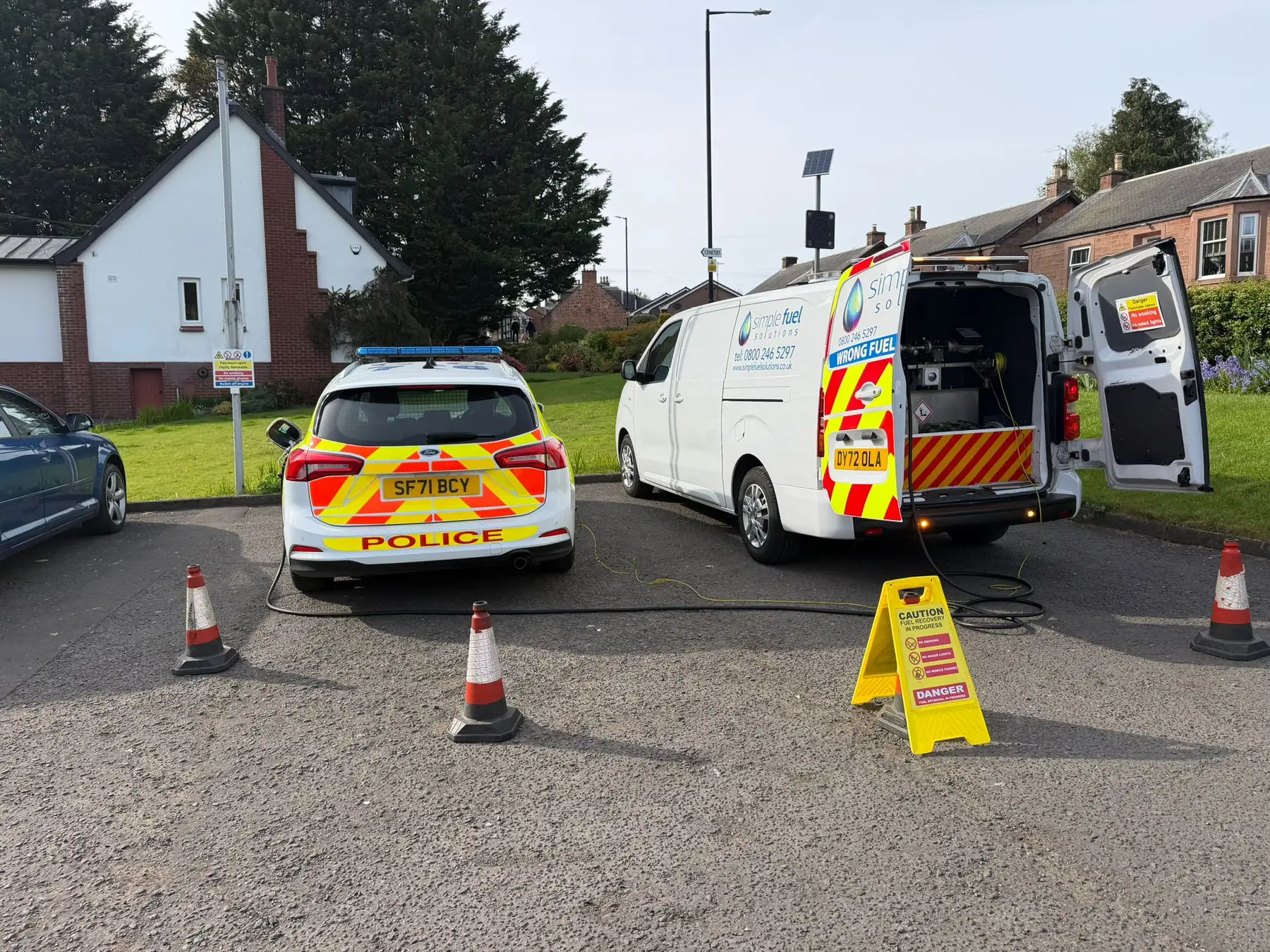
AdBlue® in Petrol Near You
AdBlue® Petrol Specialist
If you’re looking for AdBlue® in petrol recovery near you across Scotland, we attend to it with specialist equipment for this specific contamination type on every unit.
- AdBlue® in a petrol system requires more than a standard drain: the urea residue needs specific decontamination treatment, not just extraction, and a general breakdown operator without AdBlue®-specific solutions will drain the tank but may leave deposits that cause ongoing problems
- We carry specialist AdBlue® treatment on every unit, formulated for urea contamination in fuel systems: that’s what makes the difference between a proper recovery and one that leaves the job half done
- Get in touch, tell us where you are and we’ll get someone heading to you: vehicle in a safe, off-road location before we attend
Call us now for specialist AdBlue® petrol recovery near you.
AdBlue® Petrol Damage
AdBlue® in Petrol Engine
The petrol fuel system contains materials chosen for compatibility with petrol. None of them were selected with urea solution contact in mind.
AdBlue® is mildly corrosive to certain metals and polymer seals in petrol fuel system construction. It also crystallises as it dries or heats, depositing abrasive solid particles in the filter and at the precision nozzle apertures of petrol injectors. In modern direct injection petrol engines, where injectors operate at high pressure inside the combustion chamber, even small crystal deposits on the nozzle tip degrade spray quality and combustion efficiency.
Beyond the fuel system, if AdBlue®-contaminated petrol is burnt in the engine, the exhaust system faces chemistry it wasn’t built to handle. The lambda sensor and three-way catalytic converter are calibrated for petrol combustion products, and AdBlue® combustion chemistry is different enough to cause problems with sustained exposure.
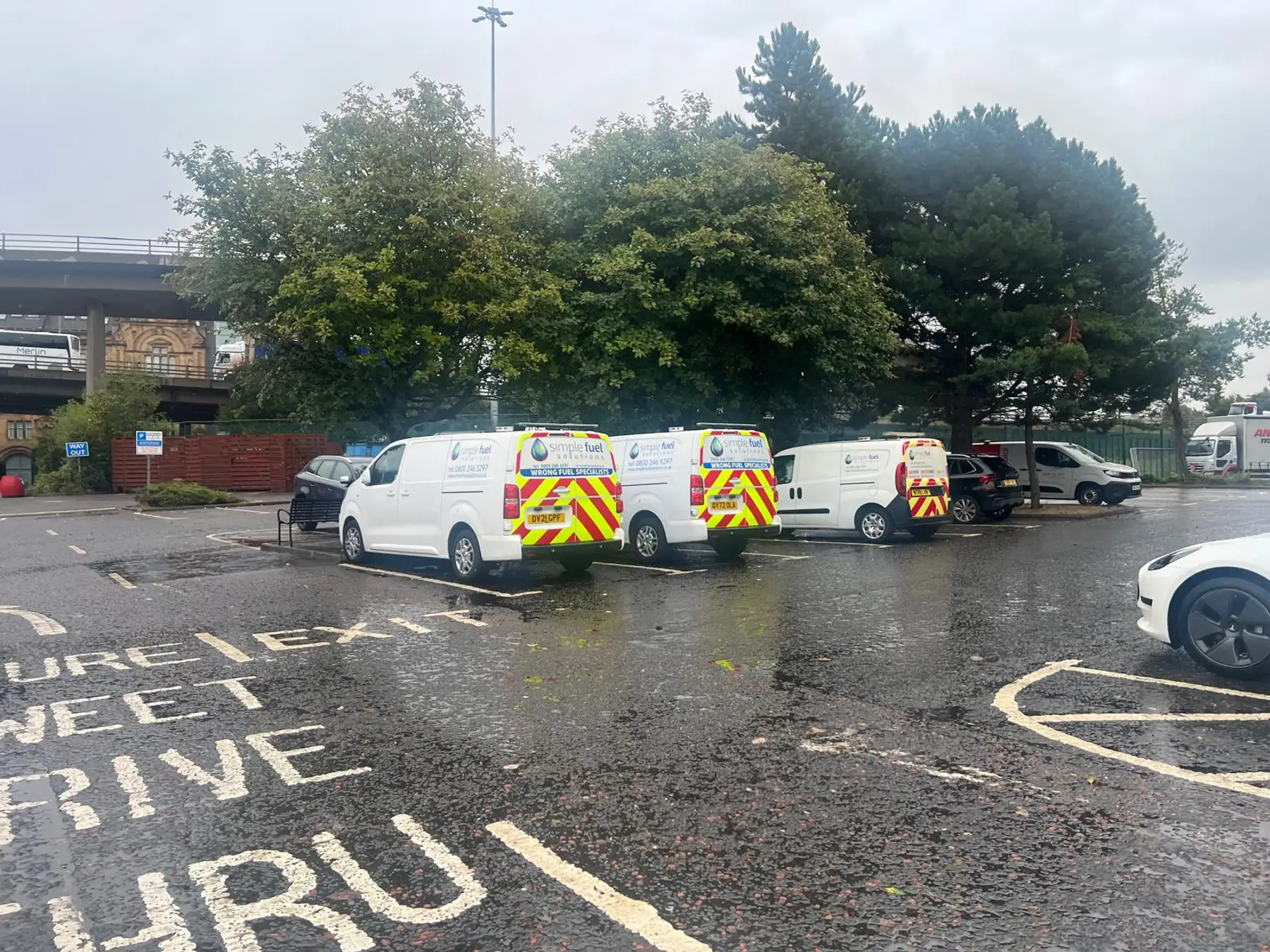
AdBlue® Petrol Recovery Cost
AdBlue® Petrol Drain Cost
AdBlue® in a petrol system is more involved than a standard fuel drain, and recovery starts from £275.
- The key variables on arrival are how much AdBlue® went in, whether the engine was started and whether any components show signs of restriction or damage: the technician assesses all of this before confirming the full cost
- Nothing starts until you’ve agreed to the price: there are no additions without your sign-off and no unexpected items on the invoice
- The post-flush check includes running the engine on clean petrol, monitoring exhaust behaviour and checking for warning lights that may point to lambda sensor or catalytic converter concerns from any pre-recovery engine operation
Call us for an honest indication over the phone before we come out.

AdBlue® Petrol Insurance
AdBlue® Petrol Claim
AdBlue® in a petrol car sits in an ambiguous position with most insurance policies, and checking the specific wording of your cover matters.
- Some comprehensive policies cover accidental wrong fluid contamination broadly, and AdBlue® in petrol may fall under that; others don’t extend beyond standard misfuelling events or exclude non-fuel fluid contamination entirely
- Look for language around wrong fluid or accidental contamination in your policy rather than just misfuelling: the specific categorisation determines what’s covered
- We provide a full written job report with every recovery, documenting the fluid type, the source as described, the specialist treatment applied and the operational sign-off result
Submit that report to your insurer alongside any relevant purchase records or receipts.
AdBlue® Petrol Symptoms
AdBlue® Petrol Emergency
If the engine hasn’t been started, there are typically no obvious symptoms. The contamination is in the tank as a liquid, and the only way to know it’s there is by reviewing what was added. That’s actually the best position to call us from; before the engine runs, we’re dealing with liquid rather than crystals.
If the engine was started before the contamination was discovered, symptoms can include rough running and misfiring, engine management warning lights associated with the fuel system or oxygen sensor, and unusual exhaust behaviour or smell. These arise from AdBlue® combustion products affecting sensor readings or urea residue interfering with injector operation.
In either case, engine off, don’t restart; call us.
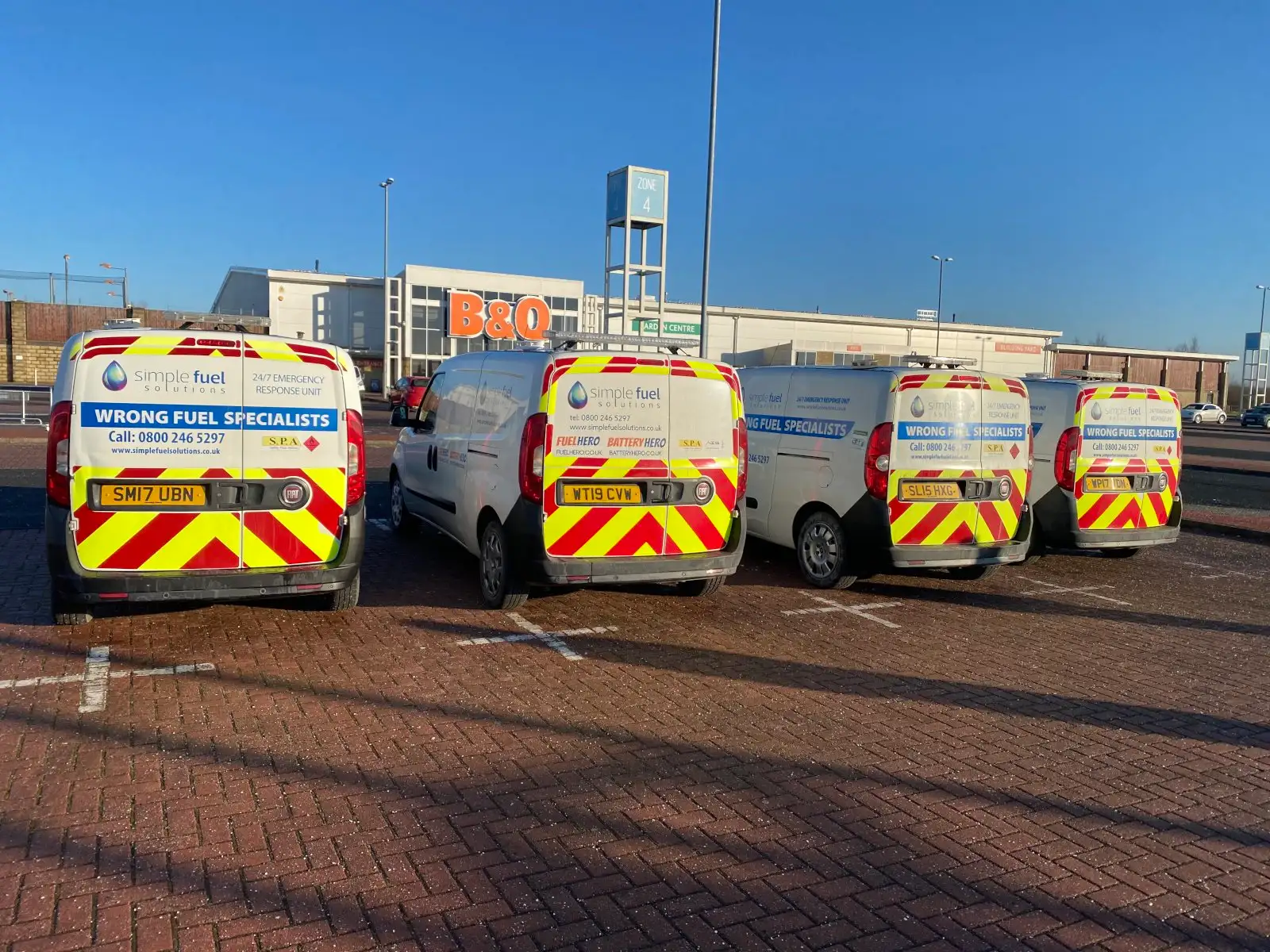
AdBlue® Petrol Emergency
AdBlue® Petrol What to Do
If you’ve just realised AdBlue® may have gone into your petrol fuel tank, here’s what to do right now.
- Don’t start the engine and don’t add more petrol to dilute the AdBlue®: dilution doesn’t prevent crystallisation, and increasing the volume in the tank means more for us to extract on arrival
- If you can move somewhere cooler without starting the engine, that slows any crystal formation in the tank while you wait
- Get to a safe, off-road location; call us and describe how the AdBlue® entered the system and roughly how much went in
We’ll advise on what the job involves and get someone heading your way.
AdBlue® Petrol Specialist
AdBlue® Petrol Expert
Our recovery process for AdBlue® in a petrol car goes beyond what a standard drain achieves, and that difference is material.
We drain the petrol tank, apply specialist AdBlue® decontamination treatment to dissolve urea residue and early-stage crystal deposits in the tank and fuel lines, flush the system thoroughly and refill with clean petrol. The post-flush operational check includes starting the engine on clean fuel, monitoring exhaust behaviour and checking for any persistent warning lights that may indicate lambda sensor or catalytic converter concerns from pre-recovery engine operation.
We don’t sign off until we’re satisfied the vehicle is running correctly, and we issue a written job report before we leave.

AdBlue® Petrol Recovery
AdBlue® in Petrol Car Cost
Recovery starts from £275, and we confirm the cost on arrival before starting any work.
- AdBlue® in a petrol car requires specialist decontamination treatment throughout the system, not just a drain and refill: that’s what drives the starting price above a standard misfuel recovery
- Whether the engine ran affects the scope: a recovery before crystallisation has developed is simpler than one where exhaust system components need assessment as well
- Our technician confirms the full price before starting, and there are no additions without your agreement
Call us and we’ll give you an honest indication over the phone of what to expect.
AdBlue® in Petrol Van
AdBlue® Petrol Van Recovery
We handle AdBlue® in petrol contamination for commercial petrol vehicles and vans as well as passenger cars across Scotland.
Commercial and agricultural environments are among the higher-risk settings for this type of contamination. AdBlue® and petrol are both handled as routine operational fluids in those settings, and the volume of AdBlue® used there creates more opportunity for containers or fillers to be confused than in a typical domestic situation.
Fleet managers with mixed petrol and diesel operations are welcome to contact us directly for any vehicle. Full documentation is provided for every commercial recovery, suitable for fleet maintenance records, insurance submissions and any regulatory requirements.
AdBlue® in Petrol Faqs
Why would AdBlue® end up in a petrol car if petrol cars don't have AdBlue® systems?
The most common route is a shared container, a can or bottle previously used for AdBlue® that wasn’t properly cleaned before being used for petrol. Agricultural and commercial settings where both fluids are handled regularly are higher-risk environments. It also occurs at home when someone manages both an AdBlue® diesel and a petrol car and containers are confused.
Is AdBlue® in a petrol tank a genuine emergency?
Yes. Keep the engine off and call us. AdBlue® introduces urea to petrol fuel system materials not designed for it, and crystallisation risk increases with heat and time. Recovery starts from £275. There’s no safe threshold; any amount of AdBlue® in a petrol system warrants a call.
What happens if the engine runs after AdBlue® goes into the petrol tank?
Switch it off immediately and don’t restart. If AdBlue®-contaminated petrol has been burnt, the exhaust system has been exposed to chemistry it wasn’t designed to process. The lambda sensor and catalytic converter are both affected. We check everything as part of the post-flush operational check and flag any concerns before we leave.
Can you identify AdBlue® in the tank by smell?
AdBlue® has a faint ammonia-like smell, clearly different from petrol’s hydrocarbon odour. If what you added from a container smells of ammonia rather than petrol, treat it as AdBlue® contamination and call us before starting the engine. AdBlue® containers are also marked with the brand name and ISO 22241 notation; check the container if you’re uncertain.
Is the recovery the same as AdBlue® in a diesel tank?
No. The system affected is different in each case. AdBlue® in diesel contaminates the high-pressure diesel fuel system. AdBlue® in petrol contaminates a petrol system with different components and different risk areas, including the lambda sensor and catalytic converter. Both require specialist decontamination treatment, but the procedure is tailored to the specific system.
Do you attend agricultural and commercial sites for AdBlue® petrol recovery?
Yes. We attend private addresses, commercial premises and agricultural locations across Scotland as well as public roads and forecourts. Agricultural settings are among the more common environments for this type of contamination given the volumes of AdBlue® routinely handled there.
Will the catalytic converter recover after AdBlue® contamination?
In many cases, yes, if the engine didn’t run for a significant period on contaminated fuel. The post-flush check monitors exhaust behaviour and warning lights. If there are concerns about converter condition after the recovery, we’ll raise them and advise on next steps before we leave.
How is AdBlue® petrol recovery different from a standard fuel drain?
A standard drain extracts liquid from the tank. AdBlue® leaves urea residue and potentially crystal deposits in the tank, lines and filter that liquid extraction alone won’t fully address. We use specialist AdBlue® decontamination treatment as part of the flush. Using the right treatment is what makes the difference between a proper resolution and one that leaves deposits to cause ongoing symptoms.
What certifications does Simple Fuel Solutions hold?
Our business holds PAS43 and ISO9001 certification. PAS43 is the British Standard for vehicle recovery operations. ISO9001 covers our quality management system. Both are independently assessed and apply to every job we carry out.
What if I'm not sure whether it was AdBlue® or something else that went into the petrol tank?
Call us and describe the situation, what you added, where it came from, and what the container looked like or smelt like. We can help you work out over the phone whether it’s likely to be AdBlue® before committing to a callout. If there’s genuine uncertainty, we’d rather come out and confirm there’s no problem than have you drive away on one.