
(For Illustrative Purposes Only)
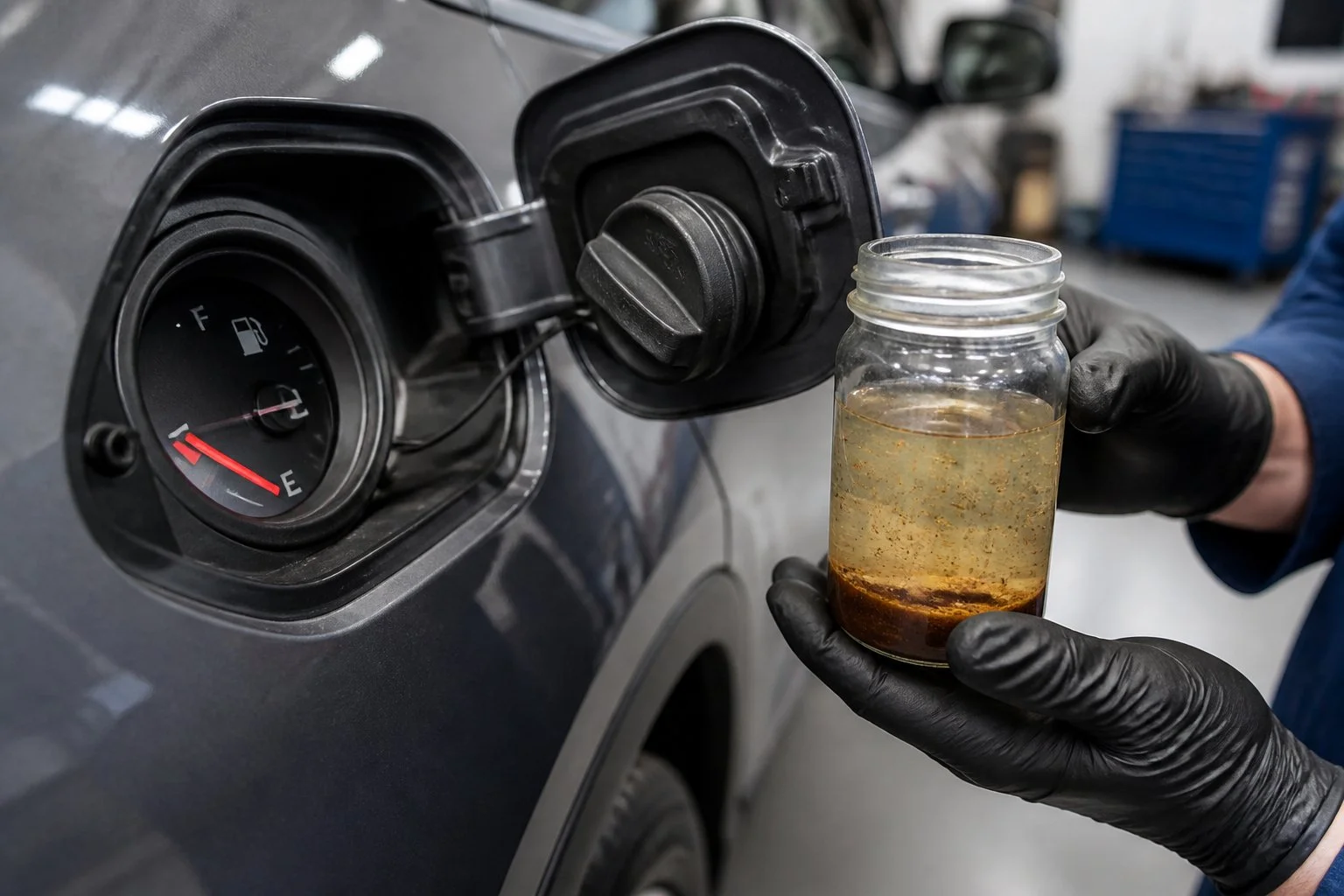
Fuel contamination throws up warning signs you can spot if you know what to look for. Catching these early really can save your engine and your wallet. If any of these signs show up after you refuel, stop driving and don’t restart the engine.
Simple Fuel Solutions is Scotland’s only independent PAS43 and ISO9001 certified fuel drain company. They usually reach drivers in about 35 minutes. Call 0800 246 5297 if you need help fast.
Any vehicle can get hit with contaminated fuel; it doesn’t matter if it’s new or old. Water, dirt, the wrong fuel, or even microbial growth can mess with your fuel system and suddenly ruin your drive.
People often sense something’s off but aren’t sure if it’s a fuel issue or just a random mechanical fault. The signs usually pop up fast after filling up.
You might have trouble starting, see odd smoke, notice rough running, or get warning lights on your dashboard. Spotting these symptoms early lets you act before the contaminants spread and create serious damage.
If you’ve got the wrong fuel in your car or another type of contamination, knowing these signs gives you a real shot at protecting your vehicle.
Sign 1: Engine won’t start, or starts then cuts out immediately

(For Illustrative Purposes Only)
The engine turns over but just won’t fire up. Sometimes it runs for a few seconds, then dies completely, usually right after you’ve filled up, often before you even leave the forecourt.
Contaminated fuel in the combustion chamber won’t ignite the way it should. In diesel cars with petrol in the tank, the fuel can’t lubricate the high-pressure pump or compress-ignite, so the engine just won’t run.
Petrol cars with diesel mixed in have a different problem. Diesel is too heavy to vaporise properly, so the spark plugs can’t ignite it, and the engine just refuses to start.
Sure, other issues like a flat battery or a dodgy starter motor can cause similar problems. But if it happens right after refuelling, that’s a big clue it’s the fuel.
Things like water contamination, diesel bug, or old, degraded fuel can cause the same symptoms. Timing is everything here.
Don’t keep trying to start the car. Each crank just pulls more bad fuel through the system, making things worse. Call Simple Fuel Solutions on 0800 246 5297 right away.
Sign 2: Excessive white, grey or black exhaust smoke
(For Illustrative Purposes Only)
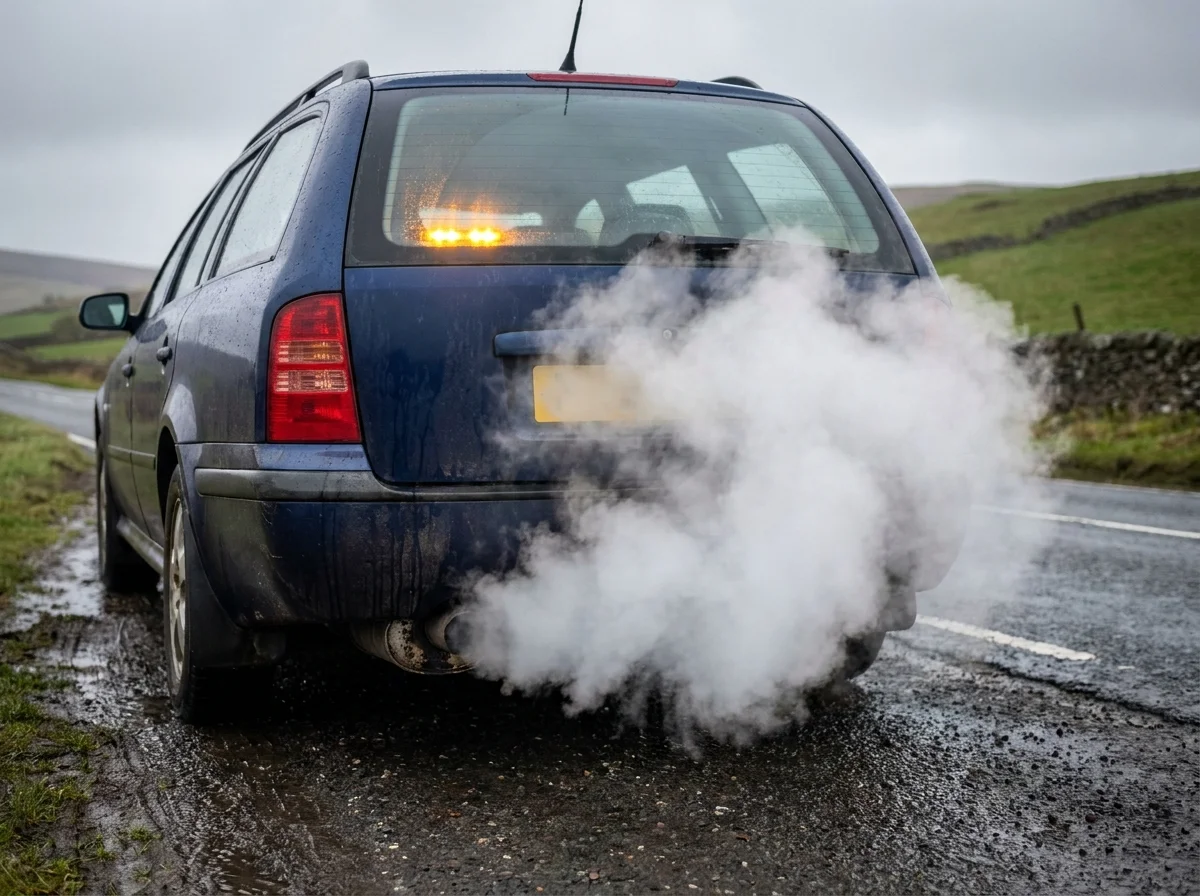
Unusual smoke coming from your exhaust right after a fill-up is one of the clearest warning signs that something is seriously wrong with your fuel.
White smoke usually means water contamination or AdBlue has entered the fuel system. The water vaporises in the combustion chamber and comes out as thick white steam from the exhaust pipe. If you see white smoke billowing after refuelling, stop immediately.
Grey smoke points to petrol contamination in a diesel engine. The petrol burns incompletely because it can’t compress-ignite the way diesel does, producing that distinctive grey haze from the exhaust.
Black smoke is most common when diesel contamination enters a petrol engine. The diesel is too heavy to vaporise and burn cleanly, so it produces thick black sooty smoke from the exhaust. You might also notice a strong diesel smell.
Any smoke that appears suddenly after you’ve filled up is not normal and should never be ignored. The longer you keep driving, the more contaminated fuel gets pushed through your injectors, fuel pump, and catalytic converter.
Pull over safely, switch off the engine, and don’t restart it. Call Simple Fuel Solutions on 0800 246 5297 for emergency fuel drain assistance across Scotland.
Sign 3: Rough running, misfiring and hesitation

(For Illustrative Purposes Only)
If your car suddenly idles roughly or feels shaky after a fill-up, fuel contamination could be the culprit. You might notice shuddering, vibrations, or the engine stumbling when you hit the accelerator.
Misfires happen when some cylinders don’t combust properly. Put diesel in a petrol car by mistake? Diesel fouls the spark plugs. Petrol in a diesel engine messes up the fuel injectors’ rhythm, so the engine burns unevenly.
Of course, rough running can also come from worn spark plugs, a failing coil pack, or an air leak. But if it hits right after you refuel, think fuel contamination first.
What to look for:
- Vibration at idle that wasn’t there before filling up
- Hesitation or stumbling when you accelerate
- Check the engine light with misfire codes right after refuelling
- Uneven engine sound
If these signs show up, stop driving. Running the engine just pushes contaminated fuel deeper into the system, risking expensive repairs.
Sign 4: Loss of power and acceleration

(For Illustrative Purposes Only)
The car feels sluggish when you step on the gas. It doesn’t respond as it should, and pulling away from a stop takes longer than usual.
Many modern cars will even go into limp mode, limiting revs and speed to protect the engine. Contaminated fuel delivers less energy per cycle, so the engine control unit senses something’s wrong and cuts back power.
Misfuelling petrol in diesel or diesel in petrol is a top cause of sudden power loss. Other things, like a blocked air filter or turbo issues, can also cause it, but those usually build up over time.
If you lose power right after filling up, chances are it’s the fuel. Stop driving immediately. Pull over, turn off the engine, and call for a professional fuel drain.
Don’t try to limp to a garage; driving just risks more damage. A mobile fuel drainage service can remove contaminated fuel on site and get you moving again.
Sign 5: Dashboard warning lights (fuel, DPF, engine)
(For Illustrative Purposes Only)
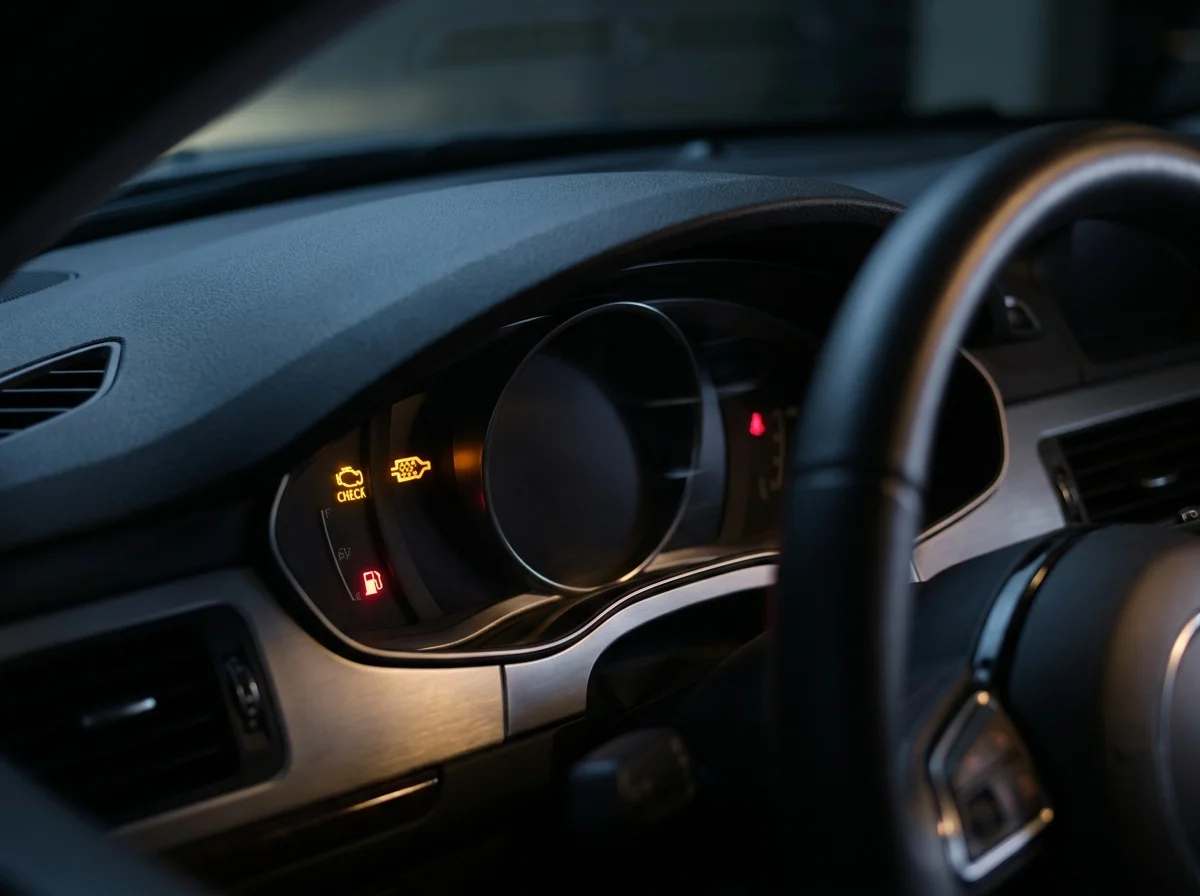
Sometimes, warning lights pop up right after you fill the tank. The most common are the engine management light, the DPF warning on diesels, or a fuel system warning. They’re usually amber or orange.
The engine control unit constantly checks combustion quality, exhaust, and fuel pressure. Contaminated fuel throws those readings off, so you get a fault code and a warning light.
A DPF warning means unburnt fuel is hitting the exhaust, which can wreck the catalytic converter. While warning lights have plenty of causes, if they come on just after refuelling, fuel contamination is a strong suspect.
Don’t just clear the light and keep going. Stop as soon as you can. You’ll need a professional fuel drain to clear your tank and filters.
Simple Fuel Solutions technicians are PAS43 and ISO9001-certified. They’ll make sure your car runs right before they leave. Proper drainage and tank cleaning prevent further damage to your fuel system.
Frequently Asked Questions
Fuel contamination brings up a lot of questions: what causes it, how to spot it, and when to call in the pros. Let’s tackle the big ones.
What are the most common contaminants that end up in a vehicle’s fuel tank?
The usual suspects are petrol in diesel cars, diesel in petrols, water from condensation or damaged seals, and dirt or rust from old fuel systems. AdBlue in the diesel tank happens too, especially with commercial vehicles.
What symptoms typically indicate petrol has gone bad in a car?
Bad petrol makes starting tough, causes rough idling, misfires, power loss, and higher fuel consumption. These problems build up slowly as the fuel degrades. If you smell odd exhaust, that’s another clue.
How can you tell the difference between contaminated fuel and a clogged fuel filter?
It’s mostly about timing. Contaminated fuel hits suddenly after refuelling. A clogged filter gets worse over weeks or months. Both cause power loss and rough running, but contaminated fuel often brings extra smoke and strong fuel smells.
Can you treat bad petrol in a car without draining the tank, and how safe is it?
Honestly, don’t try to fix contaminated fuel yourself. Driving with it just makes things worse. Stop, don’t restart the engine, and call Simple Fuel Solutions on 0800 246 5297 for a safe professional drain.
How do symptoms of contaminated diesel fuel differ from contaminated petrol fuel?
Contaminated diesel usually gives off thick black smoke. You’ll also notice excessive engine clattering and fuel system knocking; it’s pretty hard to miss.
On the other hand, contaminated petrol tends to make the engine run rough. Expect misfiring and that annoying hesitation when you try to accelerate.
Simple Fuel Solutions holds PAS43 and ISO9001 certifications. They handle both types of contamination with proper drainage and thorough system flushing.
