
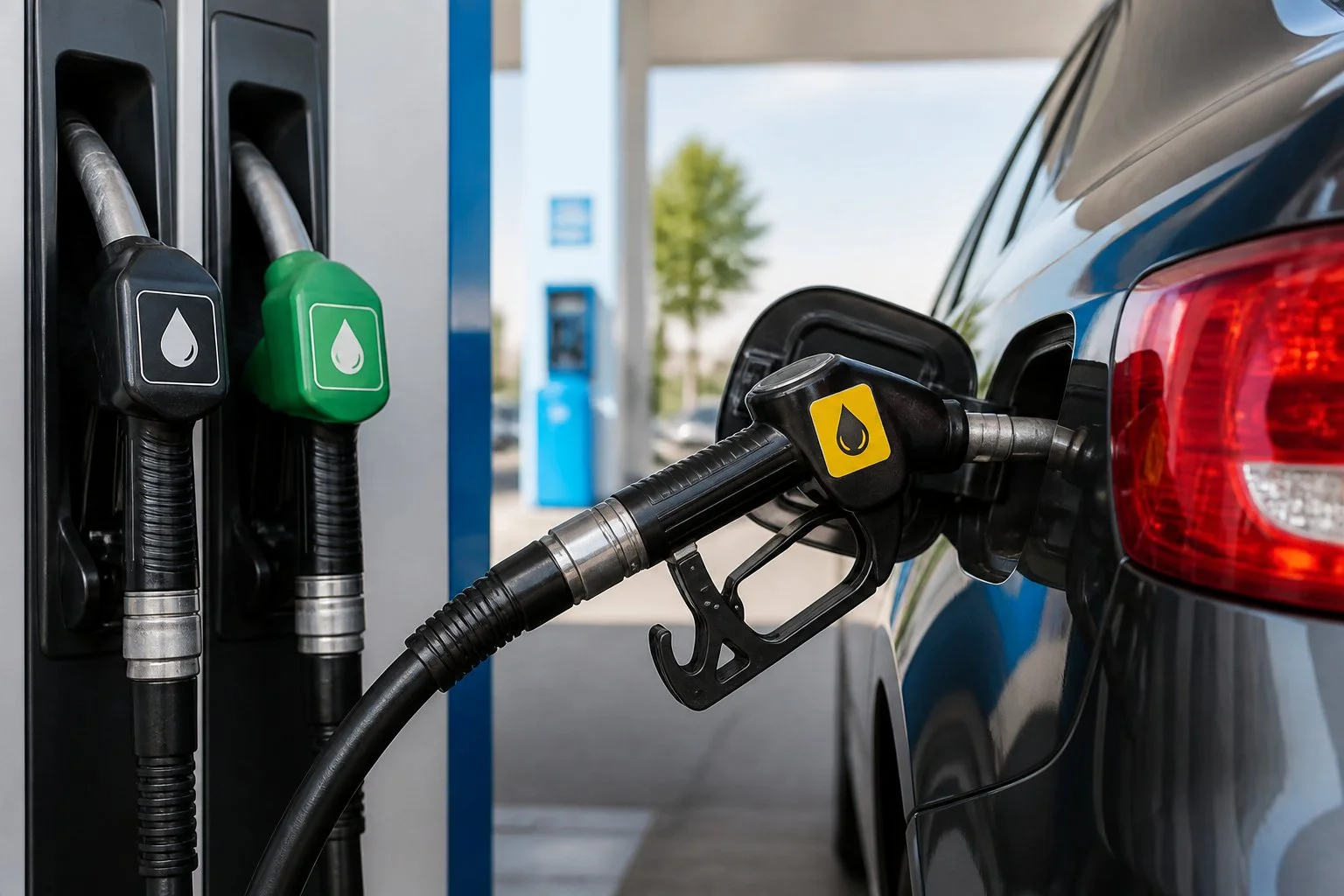
(For Illustrative Purposes Only)
Putting diesel in a petrol car isn’t as catastrophic as the opposite mistake, but it’s definitely not harmless. Diesel fuel clogs petrol injectors, causes misfires, and sends thick smoke pouring out of the exhaust.
If you realise you’ve just misfuelled, don’t start the car. If it’s already running, switch it off right away.
Simple Fuel Solutions covers all of Scotland and usually reaches drivers in about 35 minutes. Call 0800 246 5297 for emergency help with any wrong fuel in a car situation.
Misfuelling happens more often than you’d expect. Every year, over 150,000 UK drivers put the wrong fuel in their car.
Quick action makes the difference between a simple fix and a wallet-draining disaster.
Why diesel in petrol is less common (diesel nozzle usually too large for petrol filler)
(For Illustrative Purposes Only)
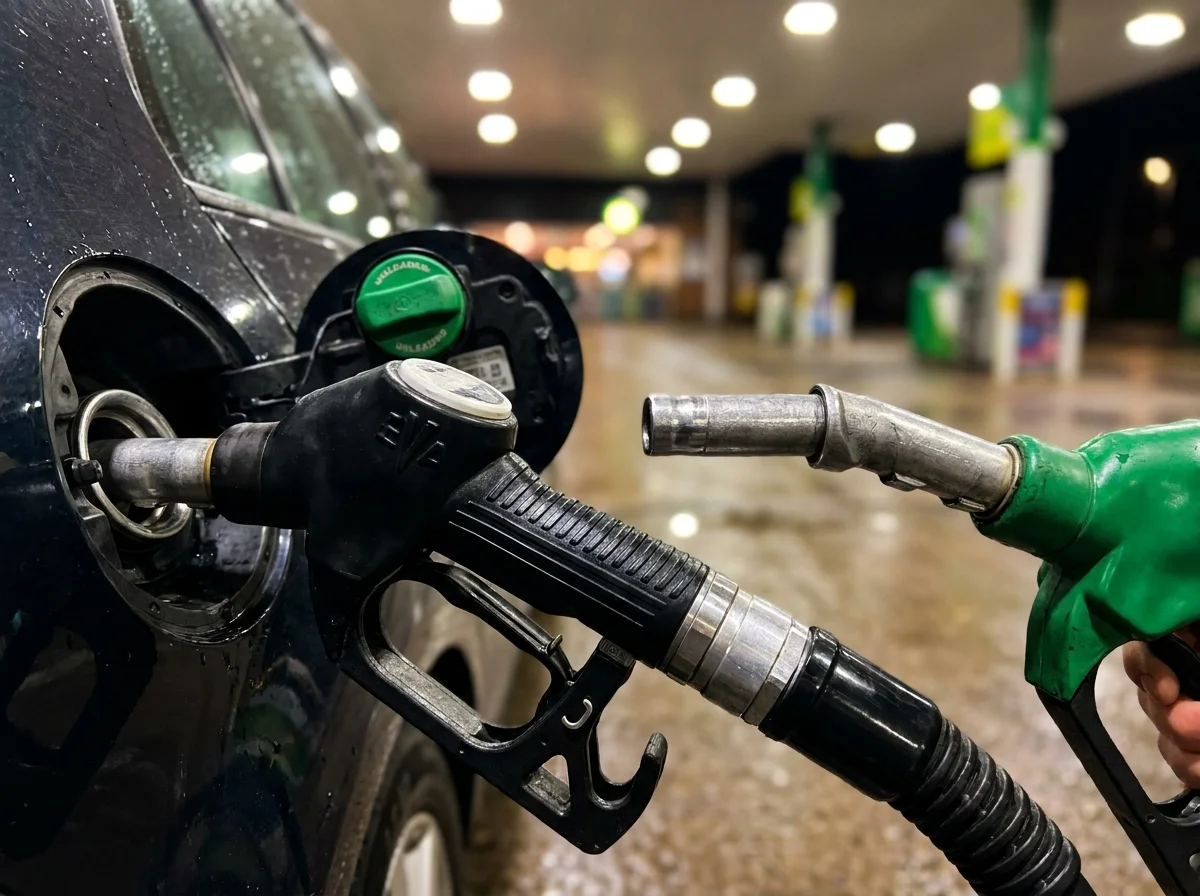
Diesel pump nozzles are wider than petrol nozzles. The average diesel nozzle is about 25mm, while petrol nozzles tend to be closer to 21mm.
Petrol cars have narrower filler necks, and many include a restrictor to block the larger diesel nozzle. This size mismatch acts as a built-in safeguard and usually stops diesel in a petrol car mistakes before they start.
Most of the time, the diesel nozzle just won’t fit. That keeps diesel out of the tank, the injectors, the combustion chamber, pretty much everywhere it shouldn’t go.
But nothing’s foolproof. Some older cars have wide filler necks without restrictors. Sometimes drivers force the nozzle in partway and squeeze the trigger. Filling up from a jerry can? The size restriction doesn’t help at all.
The system only works in one direction. A petrol nozzle easily fits into a diesel car’s wider filler, which is why petrol-in-diesel remains much more common. Still, diesel-in-petrol happens, and it needs quick action.
What happens: diesel blocks petrol injectors, causes misfires and smoke
(For Illustrative Purposes Only)
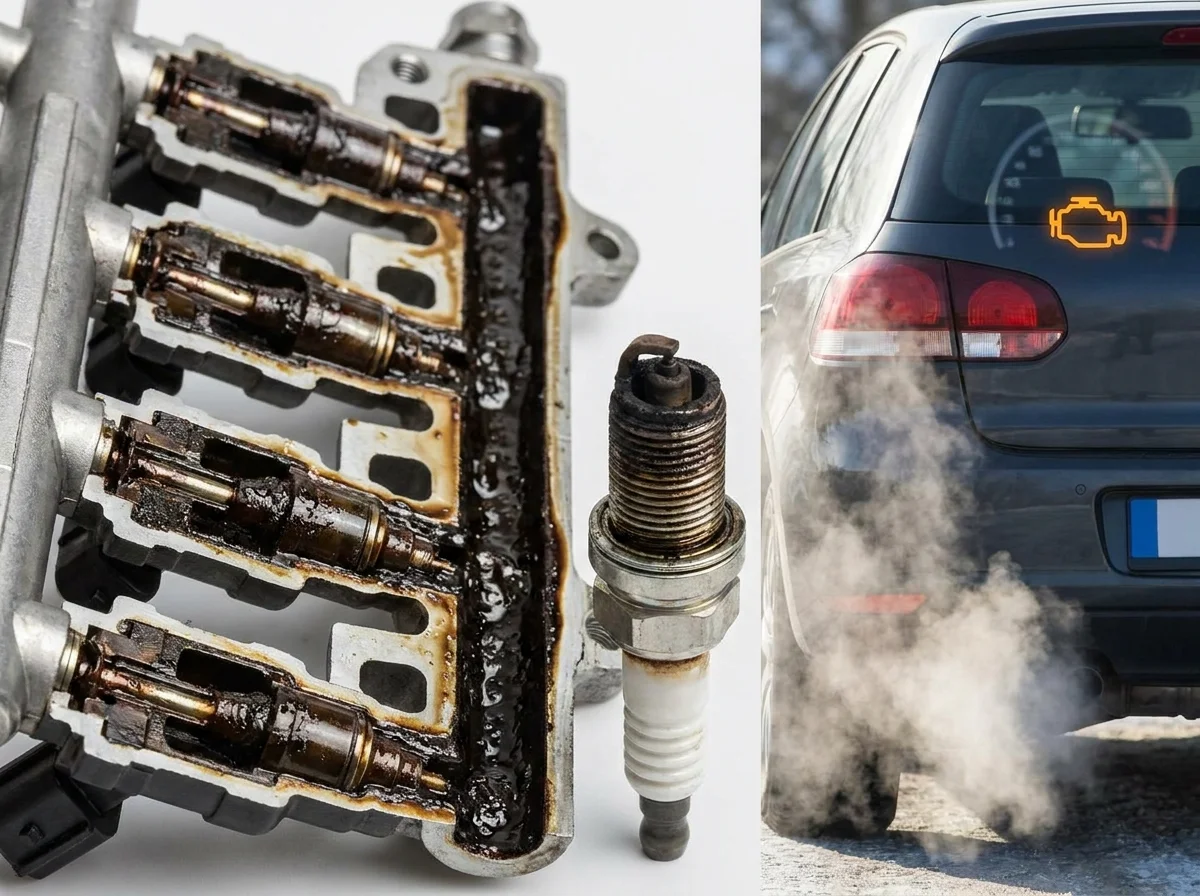
Diesel is heavier, oilier, and doesn’t vaporise like petrol. That’s a problem as soon as it gets into a petrol engine.
Start the engine, and the diesel coats the petrol injectors. This blocks the fine spray pattern they need to function. Diesel also fouls up the spark plugs, making ignition messy or impossible.
Immediate symptoms:
- Engine misfires from uneven combustion
- Rough running and hesitation when accelerating
- Loss of power because the engine can’t burn diesel efficiently
- Thick white or grey smoke from the exhaust as unburnt diesel escapes
- Rough idling or stalling at stoplights
The engine management light usually pops on fast. Sometimes you’ll see black smoke if the engine tries to burn the contaminated mix.
These issues show up within minutes of running the engine. Keep driving, and the diesel spreads deeper into the fuel system, coating more parts and raising the risk of real engine trouble.
Stop the engine right away if you spot these warning signs.
Is it less damaging? The honest comparison with petrol-in-diesel
(For Illustrative Purposes Only)
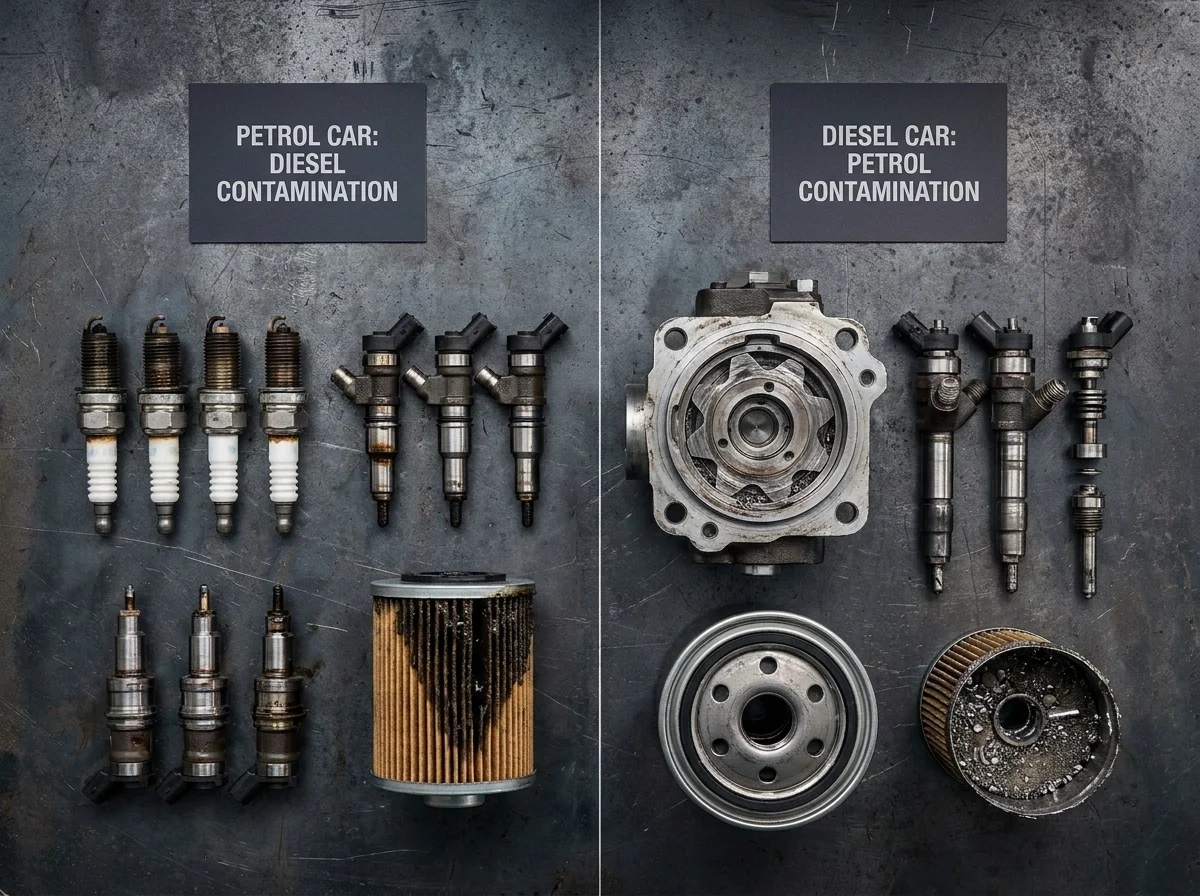
Diesel in a petrol car won’t wreck things as quickly as petrol in a diesel, but it’s still risky.
Why petrol-in-diesel is worse:
Petrol in a diesel car does damage fast. Diesel lubricates high-pressure pumps and injectors, but petrol acts like a solvent and strips away that protection. Metal-on-metal contact starts almost immediately.
This wears out pricey components. You could end up with injector damage, failed fuel pumps, and pre-ignition. Drive it, and you might face a total engine failure plus a repair bill in the thousands.
Why diesel-in-petrol is less severe:
Petrol engines don’t use fuel for lubrication the same way. Diesel in a petrol car causes knocking, misfires, and power loss. The diesel clogs spark plugs and gums up the fuel system, which stops proper ignition.
But don’t get comfortable:
Less damaging isn’t the same as harmless. Diesel in a petrol car still needs immediate professional drainage and cleaning. If you start the engine or drive, the damage adds up quickly.
Contact your breakdown cover right away. Both mistakes need urgent attention to avoid expensive repairs.
The biggest risk: driving after putting diesel in petrol
(For Illustrative Purposes Only)
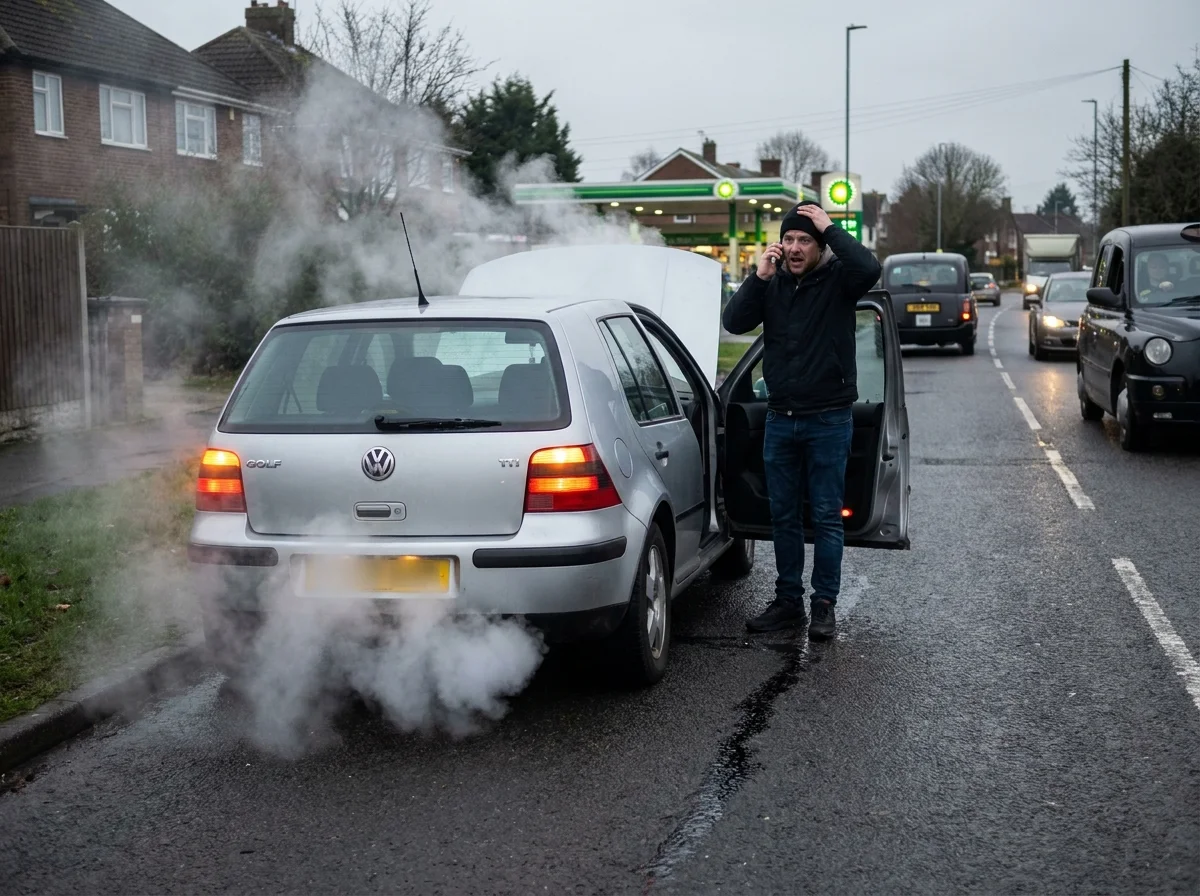
The real trouble starts once you drive the car. Every mile pushes more diesel through the injectors and into the combustion chambers.
Diesel just doesn’t burn right in a petrol engine. You’ll get engine misfires and rough idling almost immediately.
Unburnt diesel creates black smoke from the exhaust. Some of that fuel heads into your catalytic converter, which is not cheap to replace.
Your spark plugs foul up fast, causing clogged spark plugs that’ll need replacing. Sometimes you’ll need new injectors, too.
The difference between a cheap fix and a huge repair bill? It’s whether you drive the car after misfuelling.
If you catch it before starting, a drain at the forecourt usually sorts it. Drive for miles, and you’re looking at major repairs.
If you realise your mistake, don’t drive to the garage. Turn off the engine and call for mobile fuel draining. Let the professionals come to you; it’s just safer.
Stalling is likely once diesel circulates. If you stall, don’t try to restart. Call your breakdown cover provider right away.
Our diesel-in-petrol drain service across Scotland
(For Illustrative Purposes Only)
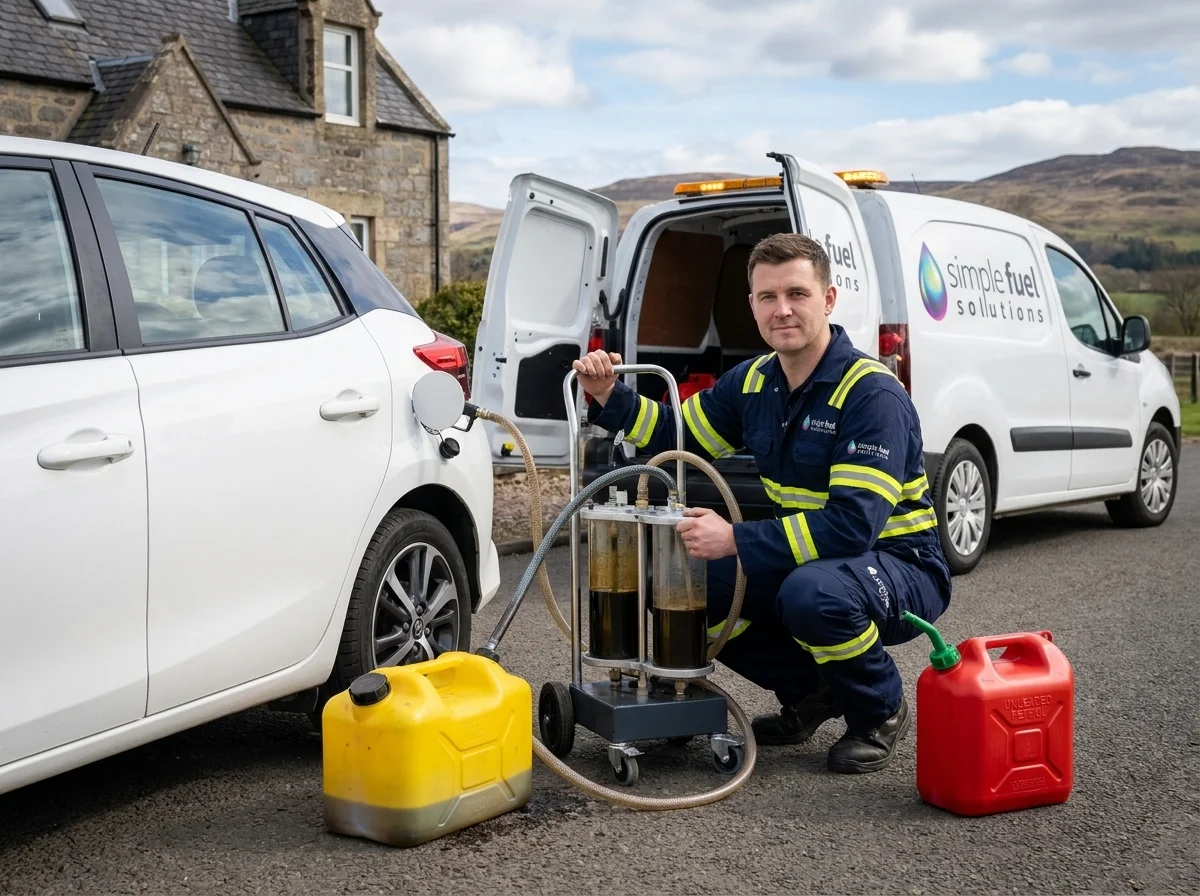
Put diesel in your petrol car? Our mobile fuel drain unit comes straight to you. Doesn’t matter if you’re at a petrol station, on the roadside, at home, or stuck in a car park.
Our technician drains the contaminated fuel and disposes of it safely. Then they flush the fuel system to clear out diesel residue that could mess with spark plugs or injectors.
We add fresh unleaded and start the engine to make sure it runs smoothly before we leave. You get a written job report, handy for insurance if you need it.
Simple Fuel Solutions is Scotland’s only independent PAS43 and ISO9001 certified fuel drain company. That’s a bit of peace of mind, right?
Service coverage:
- Available 24/7 across Scotland
- Average response time around 35 minutes
- Prices start at £129 for the drain and flush
- No hidden repair costs or call-out fees
The drain and flush usually takes 30 to 45 minutes, depending on your tank size. Our techs carry everything needed for a single-visit fix.
Quick removal of the wrong fuel helps you dodge big repair costs. Call us as soon as you realise you’ve put diesel in your petrol car.
Frequently Asked Questions
Misfuelling is surprisingly common, but the damage depends on which fuel ends up where. Diesel in a petrol car causes ignition issues, while petrol in a diesel engine ruins lubrication and internal parts.
Which is worse: putting diesel in a petrol car or petrol in a diesel car?
Petrol in a diesel car is definitely worse. Petrol strips away the lubrication diesel provides, so the fuel pump and injectors grind together and can seize or break expensive stuff.
Diesel in a petrol engine causes ignition trouble because it doesn’t evaporate or ignite like petrol. You’ll get misfires, clogged spark plugs, and poor running, but usually less severe damage and a cheaper fix.
Both mistakes need quick action. But petrol in a diesel engine brings a much higher risk of lasting, expensive damage, especially if you drive the car.
What symptoms suggest petrol has been put into a diesel engine?
If you’ve put petrol in a diesel car and started it, you’ll notice problems almost right away. The engine might be hard to start, run rough, or pour out smoke from the exhaust.
You could hear knocking or rattling as the system loses lubrication. The car may lose power, misfire, or even cut out as the contaminated fuel moves through the injectors and pump.
If you spot these symptoms, turn the engine off immediately. Driving further just spreads the petrol and causes more damage to key parts like the pump and injectors.
How far can you drive after accidentally filling a diesel car with petrol?
You really shouldn’t drive at all if you’ve put petrol in a diesel tank. Even a short distance can do real damage, since petrol removes the lubrication that protects the high-pressure pump and injectors.
If you absolutely have to move the car for safety, keep the engine at low revs and stop as soon as you can. Then call for a professional fuel drain.
The more you drive, the more petrol circulates and the more damage you’ll rack up. What could’ve been a simple drain can turn into a big repair job involving pumps, injectors, pipes, and filters.
What happens if only a small amount of diesel is added to a petrol car?
A small splash of diesel in a petrol tank is less risky than petrol in a diesel tank, but it’s still not great. If you’ve added just a litre or two and haven’t started the engine, the risk is pretty low.
Once you start the car, the diesel prevents proper ignition. You’ll probably get rough running, misfires, black smoke, and less power until the diesel burns through.
If you spot the mistake before starting the engine, don’t turn the key. Call a professional to drain the tank. If you’ve already started the car, stop driving and get the system flushed to avoid damaging the spark plugs or catalytic converter.
What is the correct procedure to fix a misfuel incident and minimise engine damage?
The most important step? Don’t start the engine. Even turning the ignition to “on” can prime the fuel pump and push the wrong fuel through the system.
Take the keys out of the ignition completely. If your car blocks the pump, just push it to a safe spot; don’t drive it, not even a few metres.
Call a professional fuel drain service right away. Let them know exactly what happened: did you put petrol in a diesel car, or was it diesel in a petrol car? Mention how much wrong fuel you added.
Tell the petrol station staff too, just so they’re in the loop.
If you haven’t started the engine, a mobile drain service can usually sort things on-site in about an hour. Expect to pay between £150 and £350, which is a bargain compared to the thousands you might face if contaminated fuel wrecks your pump, injectors, or other engine parts.
