

(For Illustrative Purposes Only)
Putting AdBlue into your diesel fuel tank is a serious contamination problem that can damage expensive fuel-system components.
If you’ve accidentally added AdBlue to your diesel tank, don’t start the engine or switch on the ignition.
AdBlue is a water-based urea solution designed for a vehicle’s exhaust treatment system, not its fuel system.
If contaminated fuel reaches the high-pressure pump or injectors, specialist cleaning, inspection or component replacement may be necessary.
At Simple Fuel Solutions, we provide 24/7 mobile wrong fuel recovery across Scotland, including assistance with AdBlue contamination.
Call 0800 246 5297 and tell us exactly what happened. We’ll assess the vehicle and explain the appropriate recovery arrangements.
What AdBlue Is and Why It Has a Completely Separate Filler
(For Illustrative Purposes Only)
AdBlue is a diesel exhaust fluid containing approximately 32.5% high-purity urea and 67.5% deionised water.
Diesel vehicles equipped with Selective Catalytic Reduction (SCR) systems use AdBlue to help reduce harmful nitrogen oxide emissions.
AdBlue is stored in a separate tank and introduced into the exhaust-treatment system. It must never be mixed with diesel fuel.
Not every Euro 6 diesel vehicle necessarily uses AdBlue. The system fitted depends on the manufacturer’s emissions-control design.
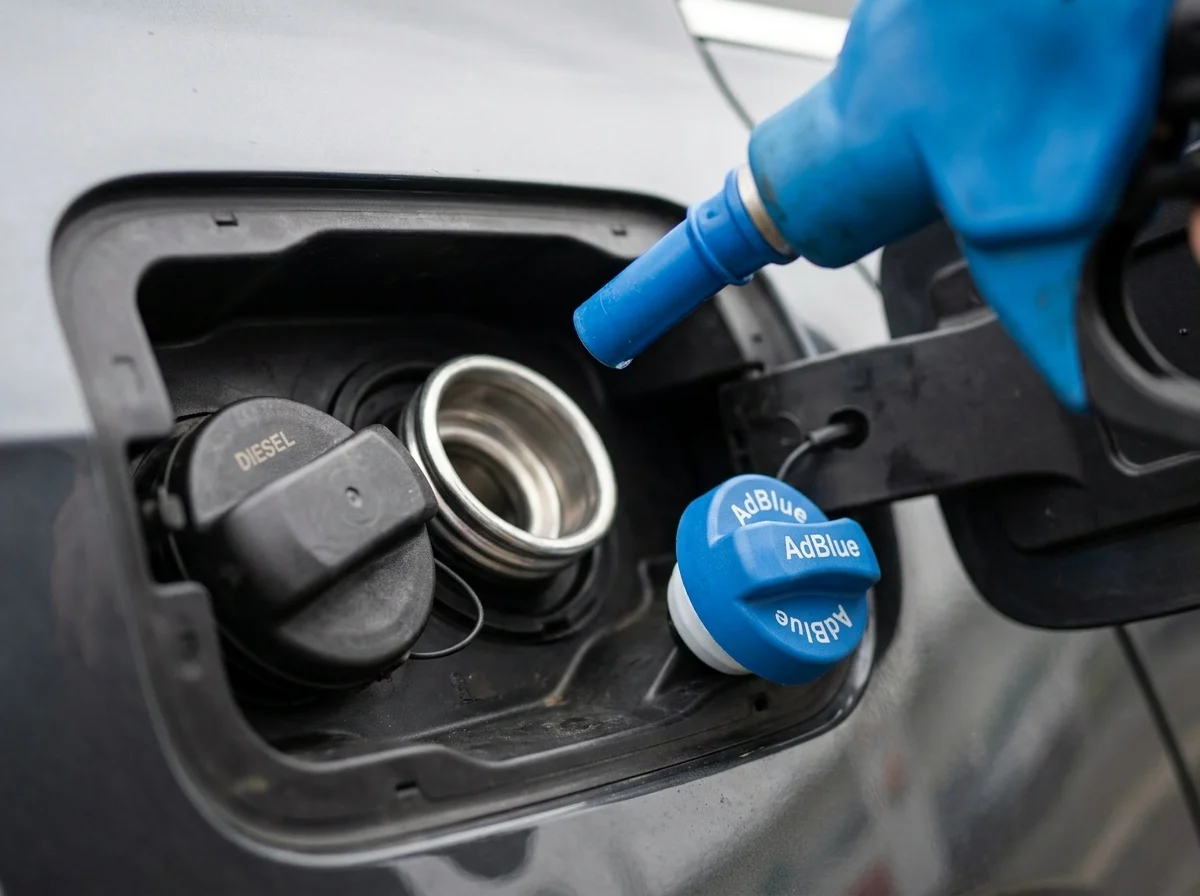
The AdBlue filler is commonly identified by a blue cap and may be located beside the diesel filler, in the luggage compartment or under the bonnet.
The separate filler arrangement helps drivers distinguish AdBlue from fuel, but mistakes can still occur.
If you’ve poured AdBlue into the diesel tank, stop filling and keep the vehicle switched off.
What Happens When AdBlue Enters the Diesel Tank (Crystallisation, Injector Damage)
(For Illustrative Purposes Only)
AdBlue is not designed for contact with diesel fuel-system components.
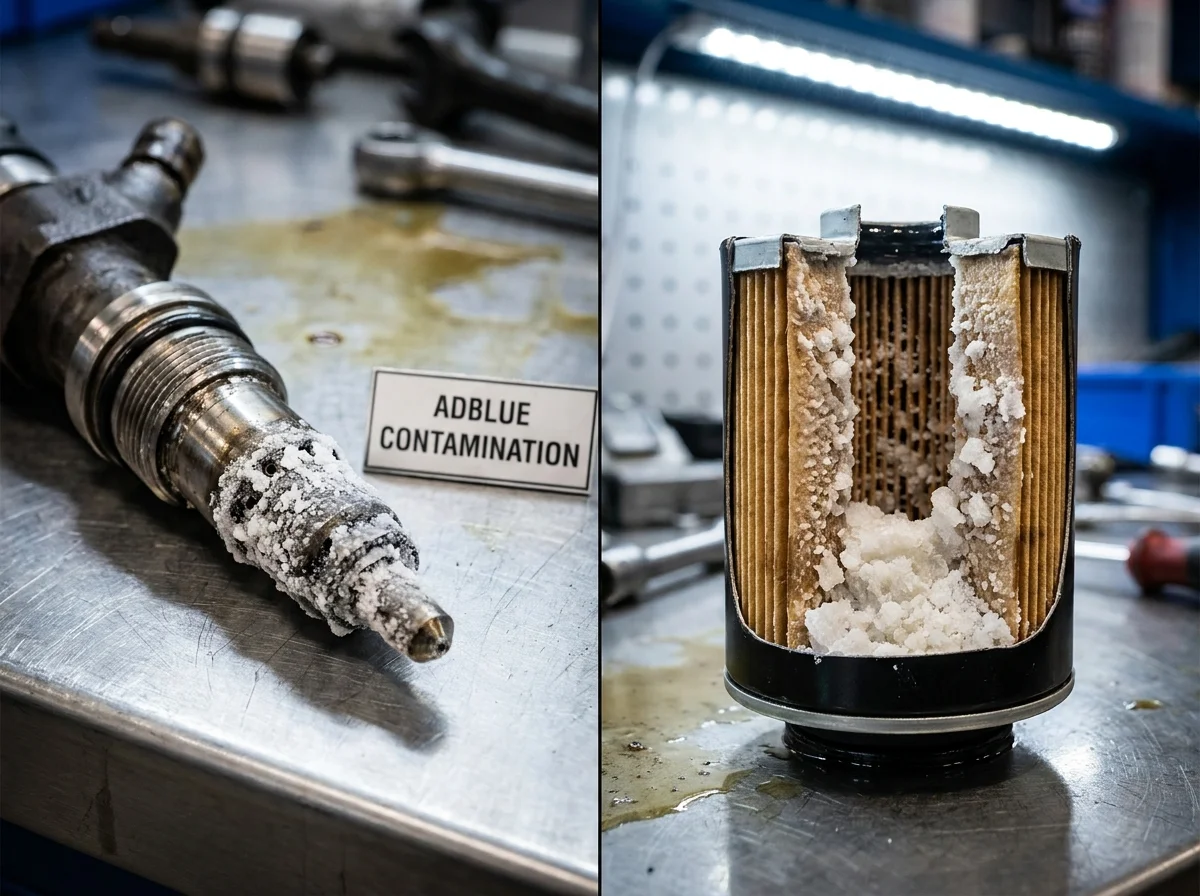
Unlike diesel, it is a water-based solution and can introduce contamination that affects pumps, filters, injectors and other components.
AdBlue can leave crystalline urea deposits as the solution dries. Contamination can also contribute to corrosion or other material damage.
However, crystallisation doesn’t necessarily begin throughout the fuel system within a fixed number of minutes.
The consequences depend on the amount added, the vehicle’s design and whether contaminated liquid has circulated.
Starting the engine may draw the contamination into sensitive high-pressure fuel-system components, increasing the risk of costly damage.
If AdBlue has entered your diesel tank, don’t start the vehicle or attempt to dilute the contamination with more diesel.
Call 0800 246 5297 for professional assistance.
Why AdBlue Contamination Is MORE Serious Than Standard Wrong Fuel
(For Illustrative Purposes Only)
AdBlue contamination presents different risks from petrol-in-diesel or diesel-in-petrol misfuelling.
Petrol in a diesel vehicle reduces the lubricating properties of the fuel, potentially damaging sensitive injection components.
AdBlue introduces a water-based urea solution into a system designed to handle diesel fuel.
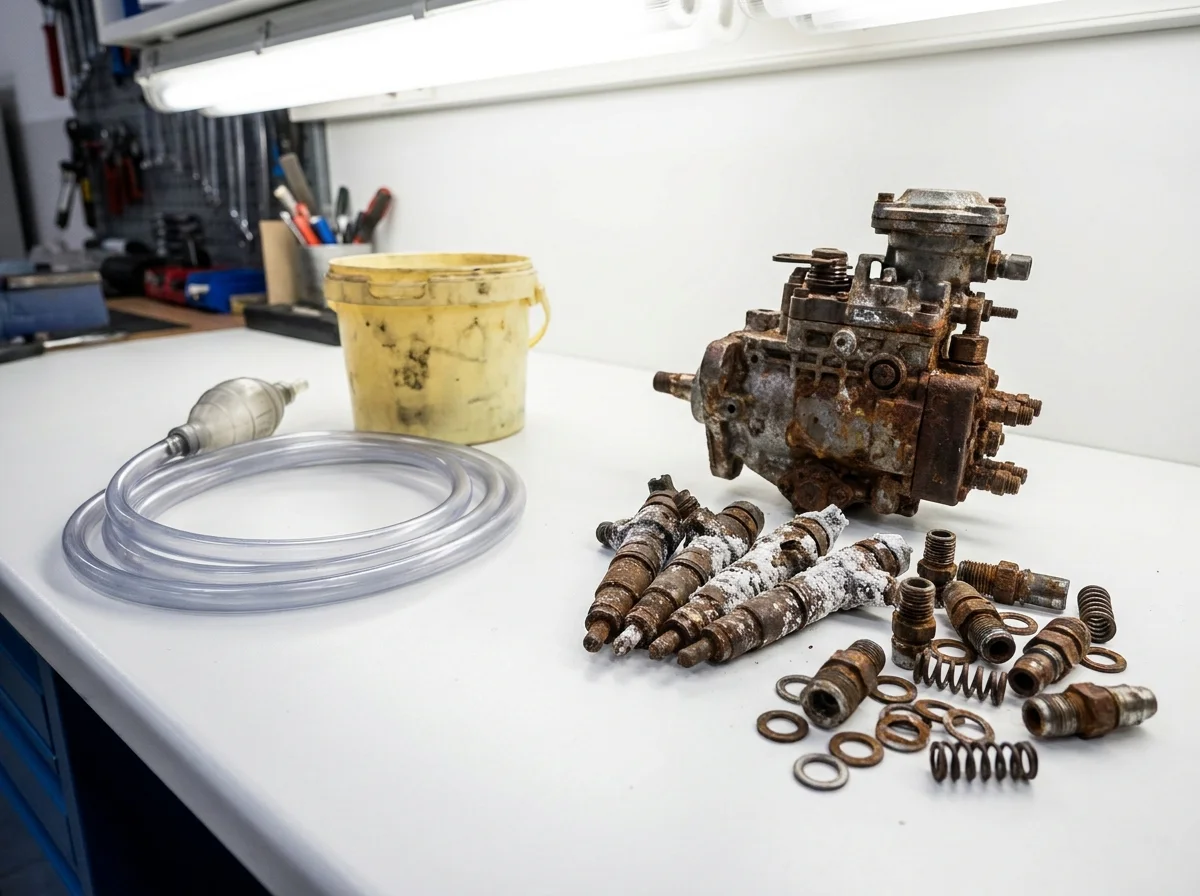
Depending on its extent, contamination may lead to deposits, corrosion and problems within the fuel delivery and injection systems.
Some cases may require more extensive cleaning or mechanical inspection than a straightforward wrong-fuel drain.
However, the severity cannot be determined simply by comparing the two fluids. Both types of contamination can lead to expensive repairs.
At Simple Fuel Solutions, we assess the incident before recommending an appropriate recovery procedure.
PAS43 certification relates to our roadside recovery safety management arrangements. It does not, by itself, certify a particular chemical decontamination treatment or guarantee that damaged fuel-system components can be restored.
Step-by-Step: What to Do Right Now (Don’t Start Engine)
(For Illustrative Purposes Only)
If you’ve accidentally put AdBlue in your diesel tank, take the following steps.
1. Stop filling immediately.
Don’t add more diesel or try to dilute the AdBlue.
Even a relatively small amount can require professional attention.
2. Keep the ignition and engine switched off
Don’t attempt to start or restart the vehicle.
Some vehicles may operate fuel-system components when the ignition is activated.
3. Tell the petrol station staff
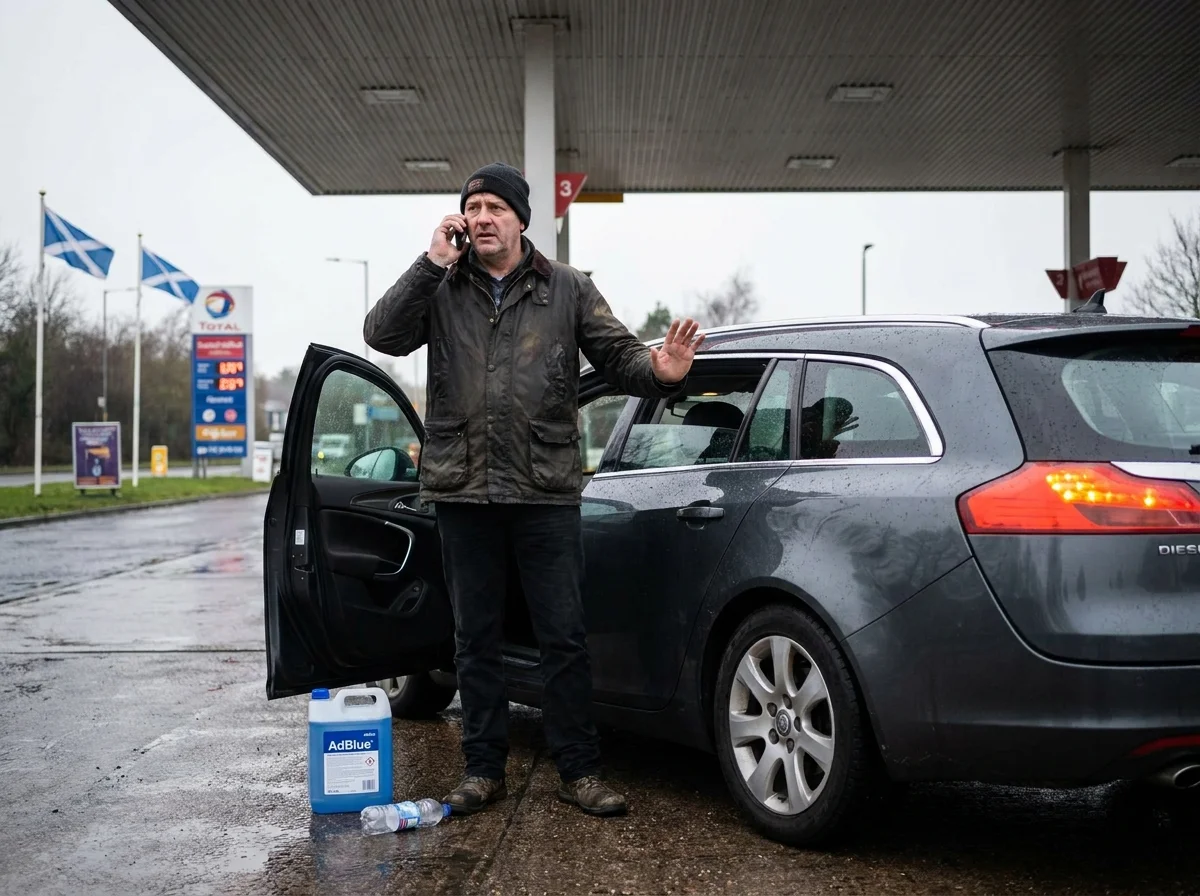
If you’re on a forecourt, inform staff and ask whether the vehicle needs to be moved safely without engine power.
Don’t attempt to push the vehicle into traffic or move it in unsafe conditions.
4. Don’t attempt a DIY fuel drain
Fuel extraction involves flammable liquids, suitable containment equipment and environmental responsibilities.
AdBlue contamination may also require cleaning or inspection beyond a basic tank drain.
5. Arrange professional assistance.
Call Simple Fuel Solutions on 0800 246 5297.
Tell us the vehicle make and model, how much AdBlue was added and whether the engine or ignition has been switched on.
We’ll assess whether suitable on-site work can be completed or whether workshop recovery is necessary.
Our AdBlue Removal Service: Scotland-Wide, Specialist Equipment

(For Illustrative Purposes Only)
At Simple Fuel Solutions, we provide professional mobile fuel recovery across Scotland, including assistance with AdBlue contamination.
We serve motorists in Glasgow, Edinburgh, Aberdeen, Dundee, Paisley, Inverness and surrounding areas.
Our business holds PAS43 and ISO 9001 certifications and uses specialist equipment for fuel recovery work.
When you contact us about AdBlue contamination, we’ll ask for your vehicle details, the quantity added and whether the engine has operated.
These details help us assess the risk and determine the appropriate recovery arrangements.
Some incidents may be suitable for mobile fuel removal and cleaning. Others require workshop inspection, additional treatment or replacement of damaged components.
We don’t guarantee that every AdBlue-contaminated vehicle can be fully repaired at the roadside.
Our standard mobile recovery prices are advertised from £129, but AdBlue-related work may have different requirements. We’ll provide a quotation based on the recovery needed.
Our website advertises an average response time of approximately 35 minutes across Scotland. Actual arrival times vary according to location, conditions and technician availability.
We’re available 24 hours a day, seven days a week.
For assistance, call 0800 246 5297.
Frequently Asked Questions
AdBlue contamination can affect a diesel vehicle in different ways depending on the amount introduced and whether the engine has operated.
What happens if a small amount of AdBlue is accidentally put into the diesel tank?
Even a small quantity of AdBlue should be taken seriously because it isn’t compatible with diesel fuel systems.
The risk depends on the quantity, tank contents and whether contaminated fuel has circulated.
Don’t start the engine or try to dilute the contamination.
Contact us so we can assess the situation and advise on the appropriate recovery procedure.
What are the common symptoms after AdBlue contamination in a diesel fuel system?
Possible symptoms include difficult starting, rough running, reduced power, warning lights and engine stalling.
However, no individual symptom or smoke colour reliably proves that AdBlue has entered the fuel system.
If you know AdBlue was added to the diesel tank, don’t wait for symptoms to appear.
Keep the vehicle switched off and arrange a professional assessment.
Should you start the engine if you have put AdBlue in the diesel tank by mistake?
No. Don’t start the engine or switch on the ignition after discovering the mistake.
Doing so may allow contamination to reach pumps, filters and injectors.
If you’re already driving, stop as soon as it’s safe and switch off the engine.
Avoid restarting the vehicle until the contamination has been professionally assessed and addressed.
How is AdBlue removed from a diesel tank and fuel lines correctly?
The appropriate procedure depends on the vehicle and how far the contamination has spread.
It may involve removing contaminated fuel, cleaning the tank, inspecting filters and flushing affected fuel-system components.
If the engine has operated, additional mechanical inspection or component replacement may be necessary.
There is no universal flushing quantity or fixed repair time that applies to every vehicle.
Our team will explain the recovery arrangements after assessing the incident.
How much can it cost to repair a diesel vehicle after AdBlue has entered the fuel tank?
The cost depends on the extent of contamination and whether the vehicle requires only fuel removal or more extensive mechanical repairs.
A vehicle that hasn’t been started may require less work than one where contamination has reached high-pressure fuel-system components.
Damaged pumps, injectors or associated components may require specialist repair or replacement.
At Simple Fuel Solutions, we provide a quotation for our recovery work before it begins.
Call 0800 246 5297 with your vehicle details for pricing information.
How long does a full AdBlue tank typically last in normal driving?
AdBlue consumption varies according to the vehicle, engine, driving conditions and emissions-control system.
Some vehicles can travel several thousand miles between refills, but there is no single mileage figure that applies to all diesel vehicles.
Your dashboard or vehicle handbook should indicate when AdBlue needs topping up.
Always use the correct AdBlue filler and follow the manufacturer’s instructions.
Never add AdBlue to the diesel fuel tank.
