

(For Illustrative Purposes Only)
A fuel tank may need draining if you’ve added the wrong fuel, discovered contamination or have old petrol that is no longer suitable for your vehicle.
If you’ve accidentally misfuelled, don’t start the engine or switch on the ignition. Doing so may circulate contaminated fuel through pumps, filters and injectors.
Draining petrol requires suitable equipment, safe working conditions and responsible waste handling. Modern fuel systems can also make tank access more complicated than expected.
At Simple Fuel Solutions, we provide 24/7 mobile wrong fuel recovery across Scotland.
This guide explains when fuel removal may be necessary, the risks of DIY draining, how our professional service works and what happens to contaminated fuel afterwards.
Why Would You Need to Drain Your Fuel Tank
(For Illustrative Purposes Only)
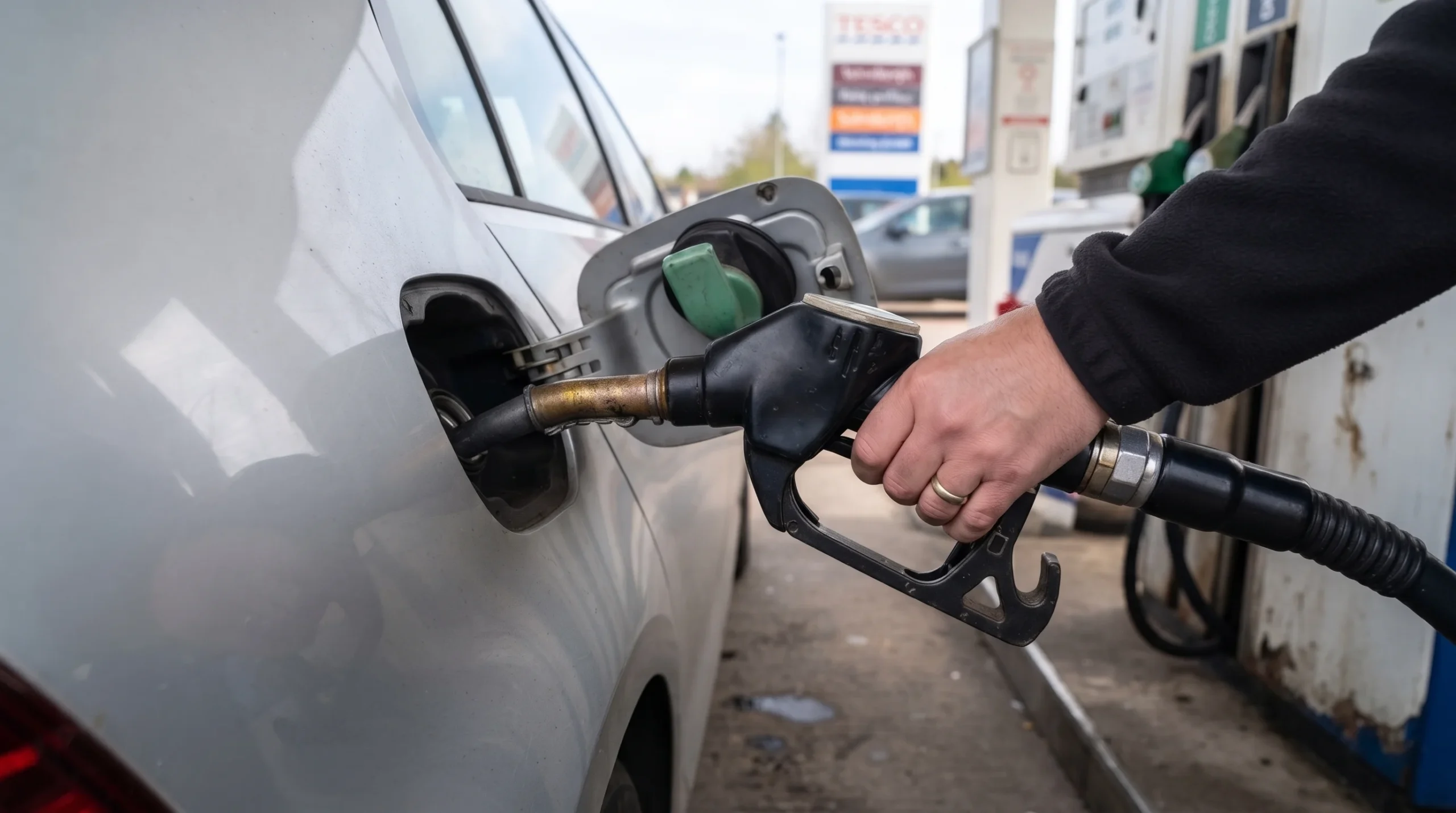
Fuel draining may be necessary when petrol or diesel is unsuitable for the vehicle or has become contaminated.
The correct approach depends on the fuel type, vehicle design and whether the engine has operated.
Misfuelling: Petrol in a Diesel Car
If you’ve put petrol in a diesel car, keep the ignition and engine switched off.
Modern diesel injection systems depend on diesel fuel for lubrication. Petrol contamination reduces that protection and can increase wear in high-pressure pumps and injectors.
There is no guaranteed safe distance to drive after misfuelling.
If you’re already driving, stop as soon as it’s safe and switch off the engine.
At Simple Fuel Solutions, we provide professional petrol-in-diesel recovery across Scotland.
Call 0800 246 5297 for assistance.
Old or Contaminated Fuel in a Petrol Car
(For Illustrative Purposes Only)
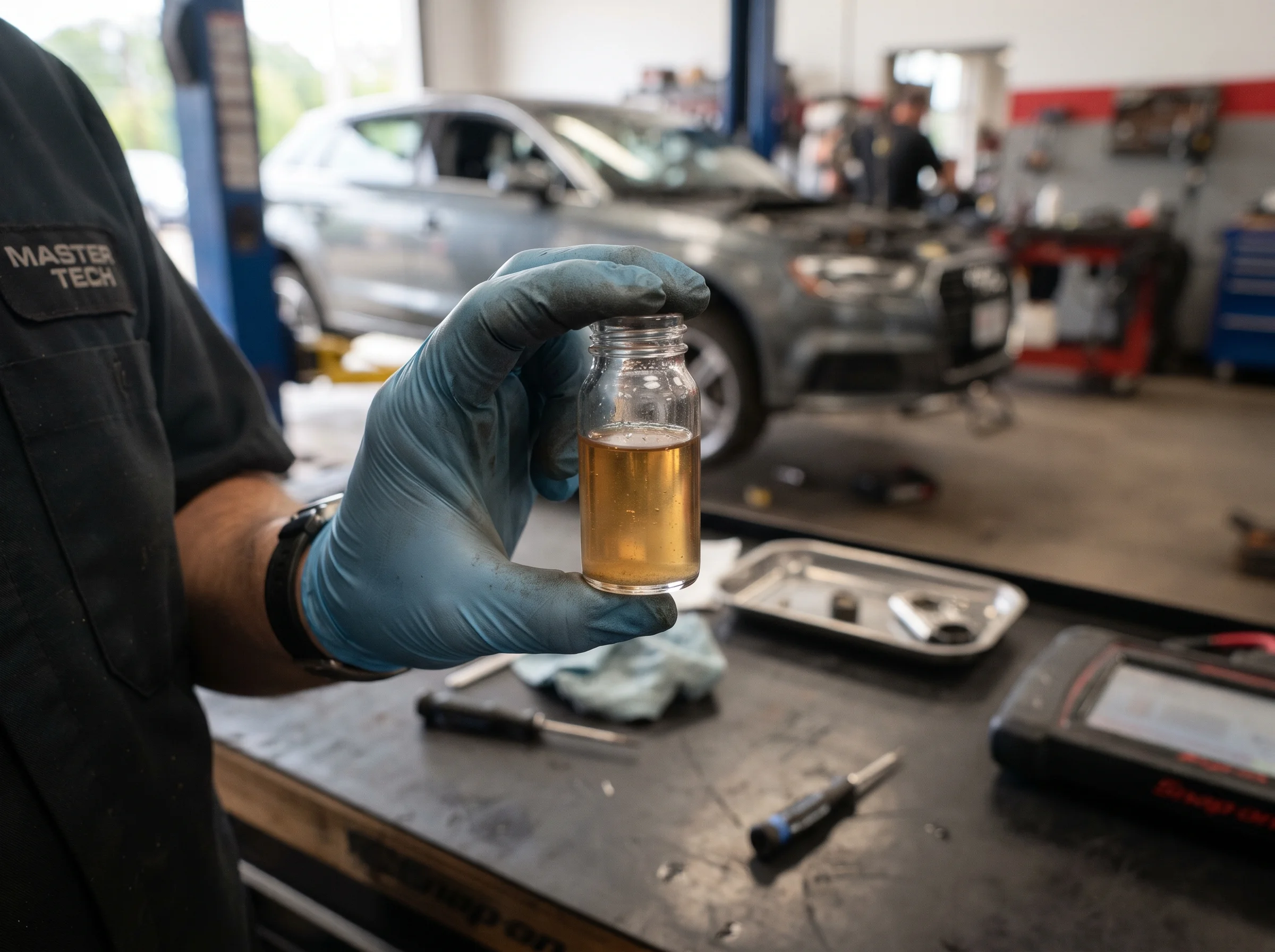
Petrol can deteriorate during prolonged storage, particularly when exposed to unsuitable storage conditions.
Degraded fuel may contribute to starting difficulties, rough running or poor engine performance.
However, these symptoms can also result from battery, ignition or mechanical faults.
Before deciding to drain the tank, establish whether degraded petrol is actually responsible.
Fuel removal may be appropriate when deterioration is confirmed, but accessing the tank safely depends on the vehicle’s design.
If you’re unsure, arrange professional assessment rather than opening fuel-system components yourself.
Water in the Fuel Tank
Water contamination can interfere with fuel delivery and combustion.
Possible symptoms include difficult starting, rough idling, hesitation and stalling.
Water may enter through contaminated fuel supplies, damaged seals or other faults.
However, these symptoms don’t prove that water is present.
The cause should be identified before deciding on the appropriate treatment.
If water contamination is confirmed, the affected fuel may need removing, and the source of the contamination should be addressed.
The Honest Truth About DIY Fuel Draining
(For Illustrative Purposes Only)
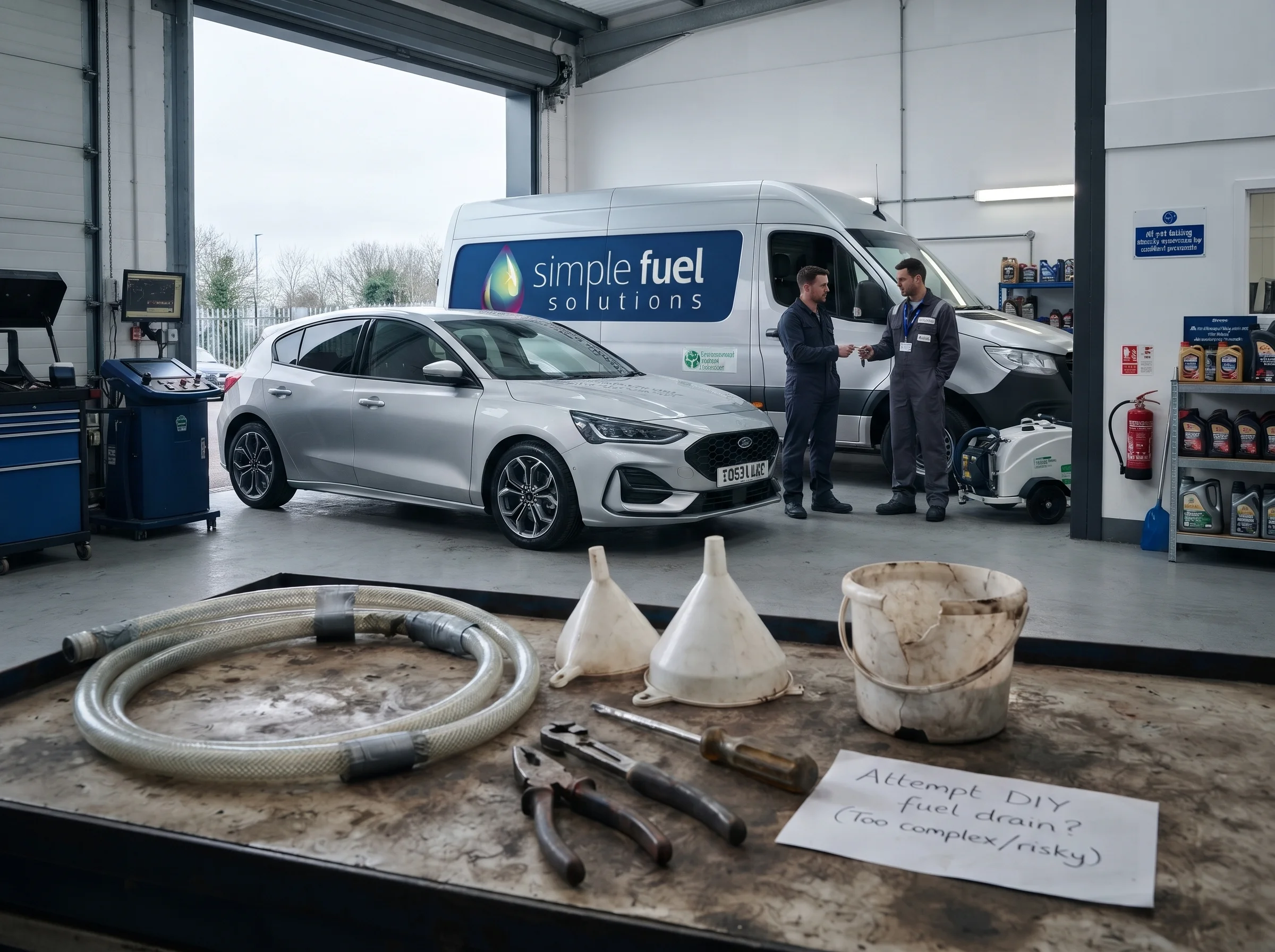
Draining petrol yourself can be dangerous, even when the vehicle is stationary.
Petrol is highly flammable, and its vapours can accumulate near the ground or in poorly ventilated spaces.
A poorly planned drain can create fire, spill, health and environmental hazards.
DIY draining isn’t automatically illegal, but fuel storage, transport and disposal must comply with applicable requirements.
For wrong-fuel incidents, pressurised fuel systems or uncertain tank access, we recommend professional assistance.
What You Need: Equipment and Safety Basics
(For Illustrative Purposes Only)
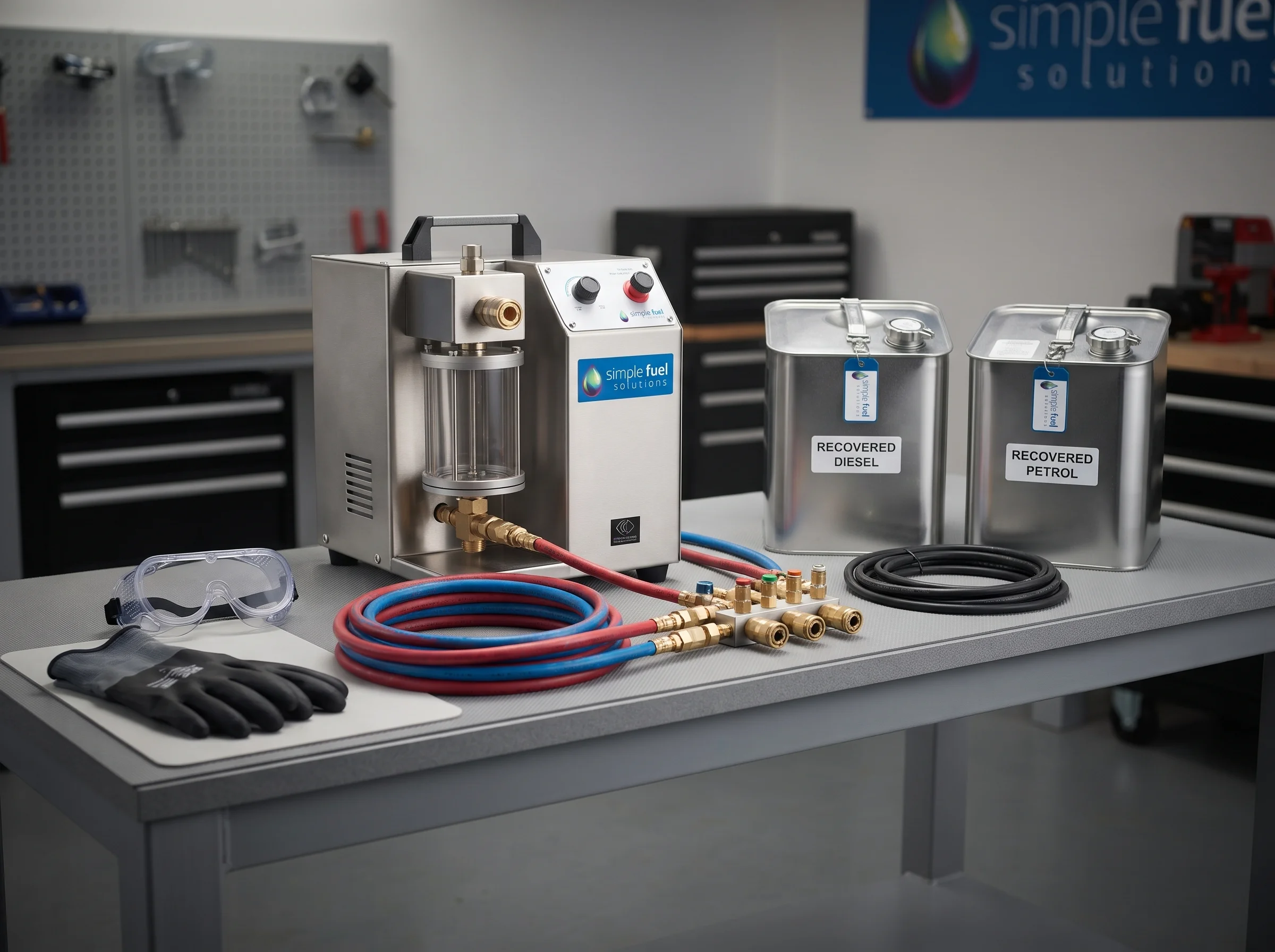
Safe petrol handling requires equipment and working conditions suitable for flammable liquids.
Important considerations include:
- Fuel containers: Must be suitable for petrol and comply with applicable container requirements.
- Extraction equipment: Must be compatible with the fuel and intended working environment.
- Personal protection: Suitable gloves and eye protection may be required.
- Working location: Must be assessed for ventilation, ignition sources and spill risks.
- Waste arrangements: A lawful collection or disposal route must be established before fuel is removed.
HSE guidance permits suitable portable plastic petrol containers with a nominal capacity of up to 10 litres and suitable metal containers of up to 20 litres.
Domestic petrol storage is also subject to quantity limits and safety requirements.
Never use household containers, improvised electrical pumps, open trays or mouth syphoning.
If you cannot meet the appropriate safety requirements, don’t attempt to drain the fuel yourself.
Where DIY Works: Petrol Cars with Old Fuel
Some older petrol vehicles have manufacturer-documented methods for safely removing fuel during maintenance.
However, this doesn’t mean every vehicle is suitable for a DIY drain.
Modern cars may have restricted filler necks, anti-siphon devices, complex tank access or pressurised fuel-system components.
Never force extraction equipment past a restriction or disconnect fuel lines without the appropriate training and manufacturer procedures.
Even when a maintenance method exists, you need suitable equipment, safe working conditions and a confirmed legal waste-disposal arrangement.
For most motorists, professional fuel removal is the safer and more practical option.
Where DIY Fails: Diesel Systems and Modern Engines

(For Illustrative Purposes Only)
Modern diesel vehicles often use high-pressure common-rail injection systems.
If petrol has entered a diesel tank, removing liquid from the tank alone may not address contamination that has reached the fuel lines, filters or other components.
Some vehicles may also activate fuel pumps when the ignition is switched on.
Avoid attempting to operate the vehicle’s fuel pump, bypass electrical controls or disconnect pressurised fuel-system components.
These actions can increase contamination or create additional safety risks.
Our technicians assess the vehicle and determine whether tank draining, flushing or further inspection is required.
What a Professional Fuel Drain Actually Involves
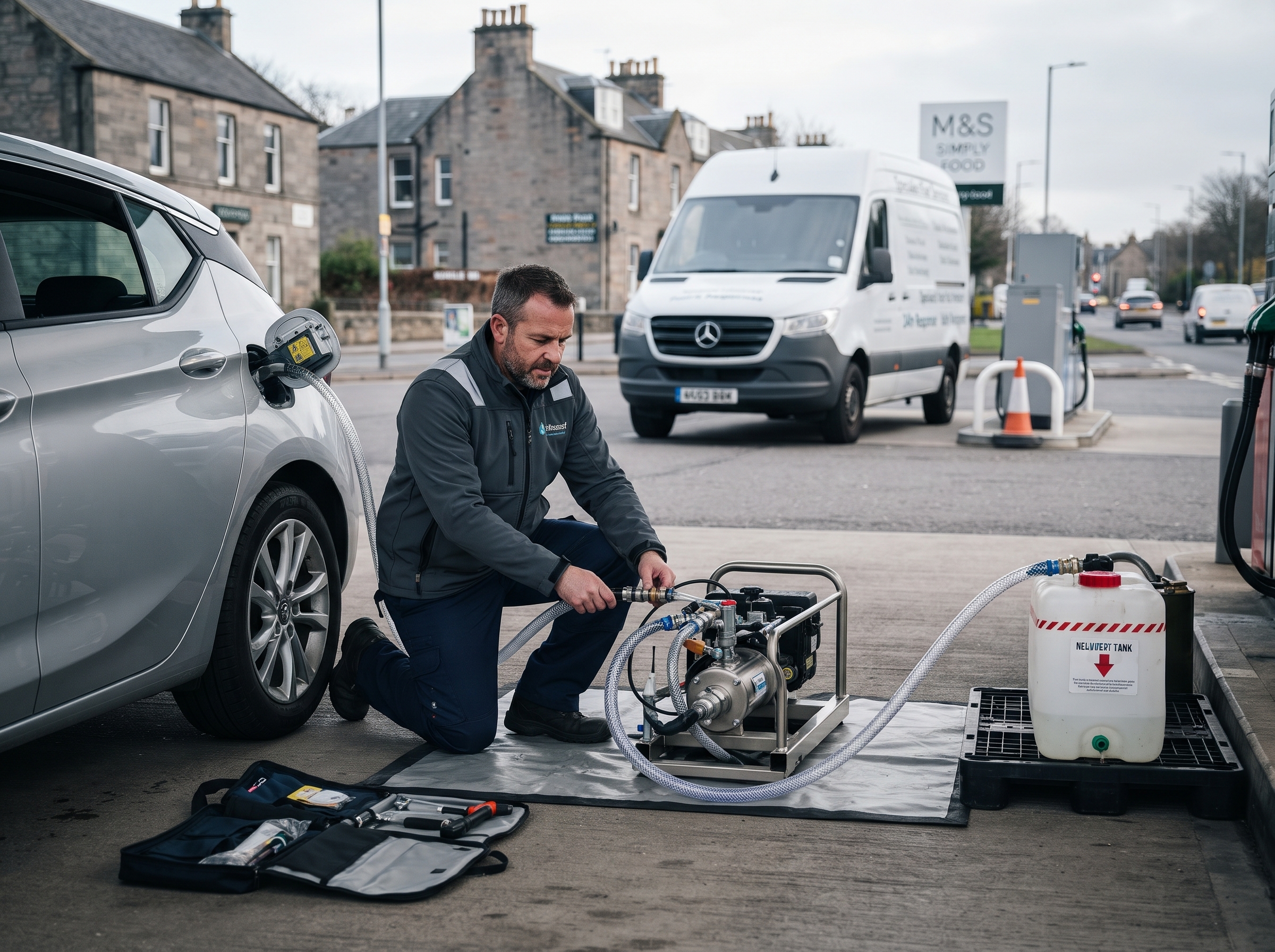
(For Illustrative Purposes Only)
A professional fuel drain involves assessing the contamination, removing affected fuel and carrying out the appropriate checks before returning a vehicle to use.
The procedure depends on the vehicle, fuel type and whether contamination has circulated beyond the tank.
At Simple Fuel Solutions, we use specialist recovery equipment and assess each incident individually.
The Simple Fuel Solutions Roadside Process: Arrival to Restart

(For Illustrative Purposes Only)
When you call us, we’ll ask which fuel was added, approximately how much entered the tank and whether the engine has been started.
Our website advertises an average response time of approximately 35 minutes across Scotland. Your actual arrival time depends on location, road conditions and technician availability.
Our recovery process may include:
- Assess the contamination: We confirm the vehicle details, incorrect fuel and circumstances of the incident.
- Select safe access: Our technician chooses a suitable extraction method based on the fuel system and working environment.
- Remove contaminated fuel: We extract affected fuel using specialist equipment.
- Flush where necessary: We address contaminated fuel lines or other serviceable components where the assessment requires it.
- Check the fuel filter: We assess whether inspection or replacement is necessary.
- Prime the system: Where applicable, we follow the vehicle-specific priming procedure.
- Verify operation: We carry out appropriate checks and restart the engine only when safe.
- Document the recovery: We provide a written job report following the completed work.
A straightforward mobile drain may take around 45–90 minutes on-site, although this is an indicative range rather than a fixed promise.
Some jobs take longer, especially when contamination has circulated or mechanical damage is suspected.
Where specialist repairs are necessary, the vehicle may require workshop attention.
For assistance, call 0800 246 5297.
Why Certifications Matter: PAS43, ATEX and SEPA

(For Illustrative Purposes Only)
Recovery providers may hold several different certifications and authorisations, each relating to a particular responsibility.
PAS43: A BSI specification addressing management systems for safe vehicle breakdown, recovery and removal operations. It covers areas such as procedures, equipment and technician competence.
ATEX: Requirements relevant to equipment intended for use in potentially explosive atmospheres. Equipment suitability depends on its purpose and the assessed working conditions.
SEPA: Scotland’s environmental regulator. Relevant authorisations and waste-management requirements apply to activities such as waste transportation, treatment and disposal.
ISO 9001: An international quality-management system standard. It doesn’t certify an individual fuel drain or guarantee a particular repair outcome.
At Simple Fuel Solutions, we hold PAS43 and ISO 9001 certifications and publish our specialist equipment and waste-registration details.
These credentials support our professional operating arrangements, alongside technician training and appropriate working procedures.
How Much Does a Fuel Drain Cost (DIY vs Professional)
Fuel-draining costs depend on the vehicle, contamination type, quantity of affected fuel and work required.
At Simple Fuel Solutions, our advertised wrong fuel recovery prices start from £129, with no separate call-out fee.
DIY equipment may appear less expensive, but the cost of suitable containers, protective equipment and waste disposal also needs consideration.
| Cost factor | DIY petrol removal | SFS professional recovery |
| Initial cost | Equipment and disposal costs vary. | From £129 |
| Extraction | Requires suitable equipment and safe access | Specialist mobile equipment |
| System flushing | Limited by vehicle and technical knowledge | Performed where required |
| Filters and diagnostics | Additional expertise may be necessary. | Assessed according to the job |
| Waste handling | The customer must arrange lawful disposal. | Included in our recovery arrangements |
| Documentation | Customer’s own records | Written job report |
A basic manual pump and container may cost approximately £35–£70 or more, before accounting for protective equipment and waste disposal.
However, purchasing equipment doesn’t make fuel extraction safe or suitable for every vehicle.
We confirm the required recovery work and price before starting. Additional filters, diagnostics or mechanical repairs should not be assumed to be included in every standard quote.
For a vehicle-specific quote, call 0800 246 5297.
The Hidden Cost of Getting It Wrong
(For Illustrative Purposes Only)
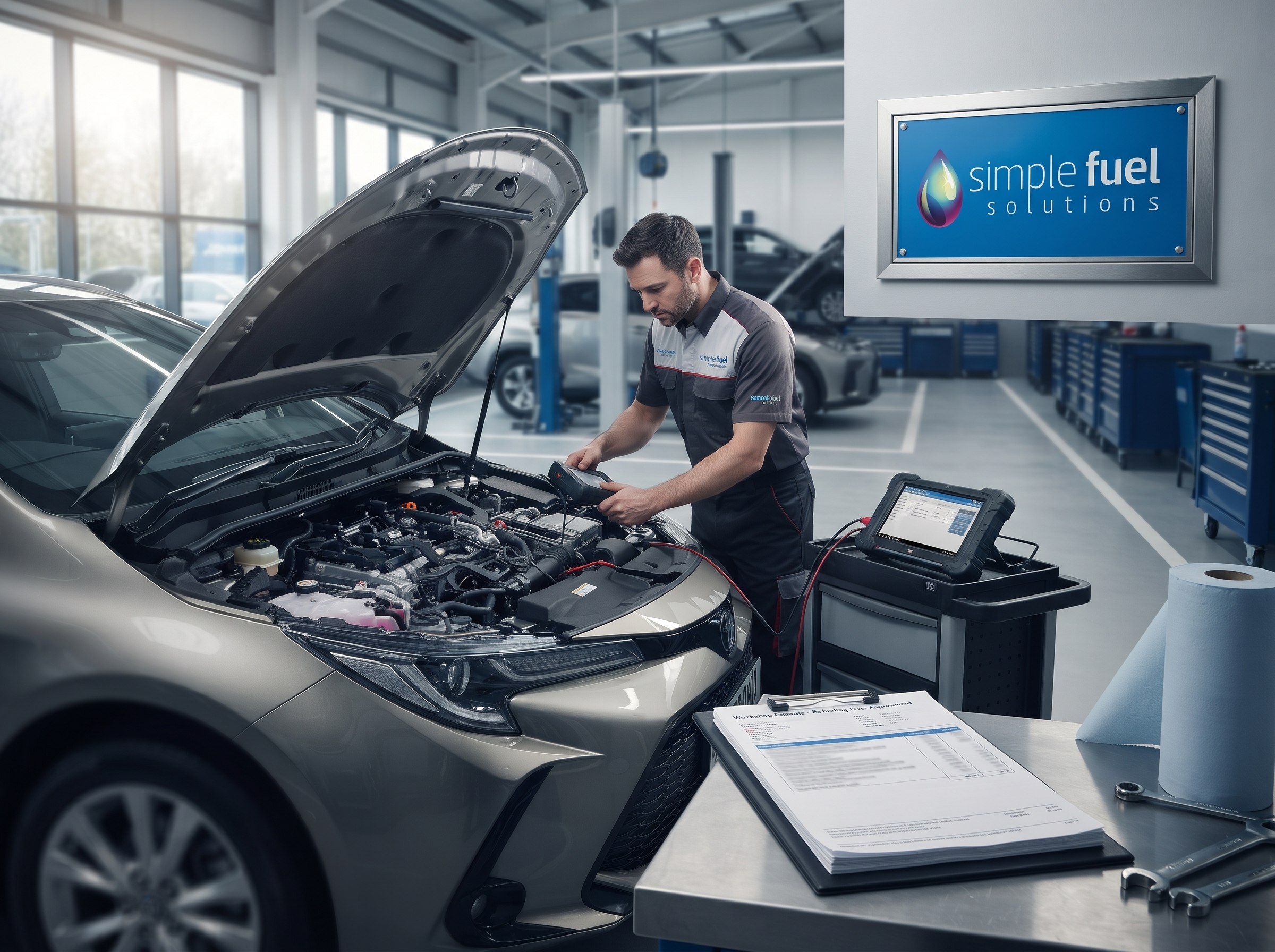
An incomplete fuel drain can leave contamination within the vehicle’s fuel system.
For example, petrol circulating through a modern diesel injection system can reduce lubrication and potentially damage expensive components.
Possible repairs may involve fuel pumps, injectors, filters or other associated parts.
The cost varies significantly by vehicle, and major repairs can run into thousands of pounds.
However, serious damage isn’t inevitable after every misfuel.
Keeping the engine switched off reduces the risk of further contamination and may make recovery more straightforward.
Our written job report can support future insurance or warranty discussions, although reimbursement and warranty decisions depend on the relevant terms.
How to Dispose of Contaminated Fuel Safely in Scotland

(For Illustrative Purposes Only)
Contaminated petrol and diesel must not be poured into drains, soil, waterways or general household waste.
Waste fuel can create fire hazards and environmental damage if handled incorrectly.
In Scotland, hazardous waste is generally referred to as special waste, with relevant controls depending on the waste and the activity involved.
Professional operators must follow the applicable waste-handling, transport and transfer requirements.
At Simple Fuel Solutions, we arrange the responsible removal and transfer of contaminated fuel collected during our recovery work.
SEPA Rules and Your Local Council
Don’t assume your local household waste recycling centre accepts petrol or diesel.
Acceptance varies, and some Scottish councils explicitly prohibit fuel at their recycling centres.
For example, Edinburgh Council does not accept petrol or diesel at its household waste recycling centres.
If you have old or contaminated fuel to dispose of, contact your local council or an appropriately authorised waste contractor before attempting to transport it.
Before arranging disposal:
- Confirm whether the facility accepts the particular waste fuel.
- Ask about quantity limits and any collection arrangements.
- Check the requirements for suitable containers and transport.
- Don’t mix fuel with other waste materials.
- Never leave fuel at a recycling centre without authorisation.
Domestic petrol storage and transport are also subject to safety requirements. HSE guidance allows up to 30 litres of petrol at domestic premises without notifying the relevant Petroleum Enforcement Authority, provided the applicable conditions are met.
That limit should not be mistaken for permission to transport or dispose of contaminated fuel in any quantity or manner.
When we carry out a professional fuel drain, we handle the recovered contaminated fuel through our waste-management arrangements.
For wrong fuel recovery across Scotland, call 0800 246 5297.
Frequently Asked Questions
Can I drain petrol from my diesel car myself?
We don’t recommend attempting to drain a diesel vehicle after petrol contamination.
Modern diesel systems may retain contaminated fuel in lines, filters and other components even after the tank has been emptied.
A professional assessment can establish the appropriate extraction and flushing procedure.
At Simple Fuel Solutions, we provide 24/7 mobile wrong fuel recovery.
Call 0800 246 5297 for assistance.
How long does a professional fuel drain take?
A straightforward mobile fuel drain may take around 45–90 minutes on-site, depending on the vehicle and work required.
More complex contamination or mechanical damage can extend the process.
Our website advertises an average response of approximately 35 minutes, but actual arrival times vary by location and availability.
We provide an estimated arrival time when you call.
Is it legal to pour old fuel down the drain?
No. Pouring petrol or contaminated fuel into drainage systems can cause pollution, create fire hazards and breach environmental law.
Don’t dispose of fuel through household drains, soil, waterways or ordinary bins.
Contact your council or an authorised waste contractor to establish an appropriate disposal arrangement.
Not every household recycling centre accepts waste petrol.
How much does a fuel drain cost in Scotland?
Our advertised wrong fuel recovery prices start from £129.
The final cost depends on the vehicle, amount of contamination and required work.
We don’t charge a separate call-out fee and confirm the recovery price before starting.
Our service includes appropriate fuel removal and written documentation, with additional work assessed according to the incident.
Call 0800 246 5297 for a quote.
What equipment do I need to drain a fuel tank?
Fuel extraction requires equipment suitable for the fuel type, vehicle and working environment.
Petrol handling may involve approved containers, compatible extraction equipment and appropriate protective equipment.
However, modern vehicles may have restricted tank access and pressurised fuel-system components.
For misfuelling or uncertain fuel contamination, we recommend using a trained professional rather than attempting DIY extraction.
Will my car be damaged if I drive on contaminated fuel?
Damage is possible, particularly if contaminated fuel reaches sensitive fuel-system components.
Petrol in a modern diesel vehicle can reduce lubrication within high-pressure pumps and injectors.
The extent of damage depends on the vehicle, contamination and engine operation.
There is no guaranteed safe distance to drive.
If you’ve already started driving, stop as soon as it’s safe and switch off the engine.
Call Simple Fuel Solutions on 0800 246 5297 for professional assistance.
